Second source of income: textile printing as a sideline
Are you thinking about setting up a second source of income in advertising and textile printing? We’ll explain what you need to get off to a good start with this side business.
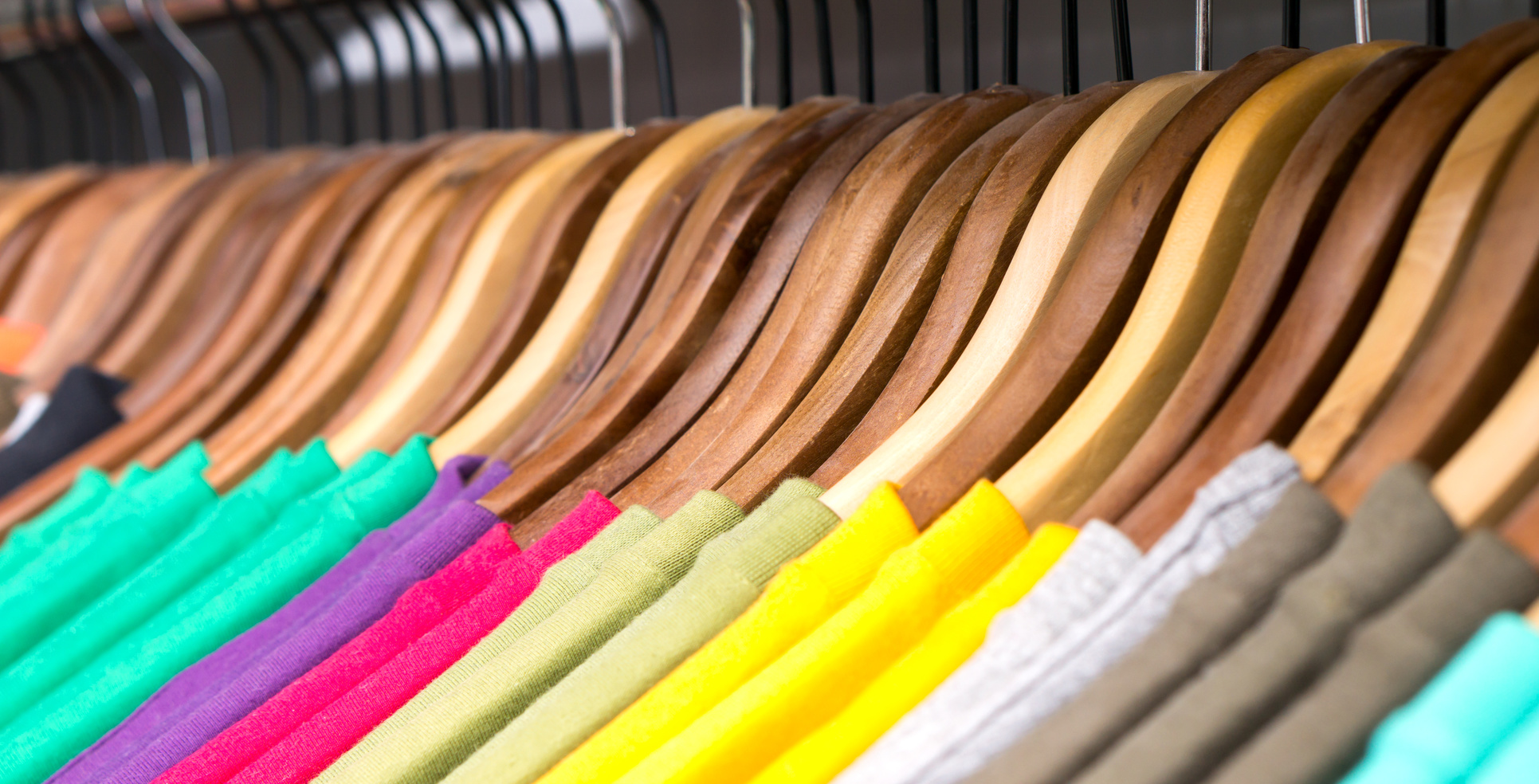
Textile and promotional printing is as varied as it is easy to carry out. Only in very few cases is specialised training required to achieve optimal results using the relevant equipment. Many work processes can even be learnt through self-study or as part of further training courses and workshops. That is why promotional printing – and, above all, textile printing – has become a popular way of establishing a second source of income alongside one’s main job. Particularly if you already have suitable commercial premises at your disposal – for example, within your existing business – it is easy to convert them for multiple uses. Why not make the most of all the resources available to you?
Flexible options combined with high cost-effectiveness
Textile printing is straightforward and, once you’ve purchased the equipment, can be carried out without significant ongoing costs. Whether you offer custom-printed T-shirts tailored to your customers’ preferences or create your own range straight away – there’s hardly any other trade where you’ll find such flexibility as in textile printing. But what exactly do you actually need to ensure your venture succeeds and that this second source of income establishes itself as a lucrative sideline without breaking the bank? After all, a sideline should complement your main job and therefore not take up more time and energy than is strictly necessary.
What you need for textile printing
Toner transfer

The most cost-effective method for textile finishing is toner transfer printing. This is particularly well suited to those new to the field, as it requires very few tools and is easy to carry out. Essentially, you only need three things to get started: the first and most important piece of equipment is, of course, the transfer press. Whilst this is the most costly component, it remains cost-effective even for a small-scale printing business thanks to the one-off purchase, its high efficiency and its durability. We also offer a selection of second-hand heat transfer presses at discounted prices in our shop. We have checked every machine to ensure it is in perfect working order and is in excellent condition. If you’re keen to try your hand at this as a side business to begin with, we recommend starting out with a simple second-hand machine.
Next, you’ll need a laser printer, as this is best suited to precise printing onto the transfer film. A standard domestic printer will suffice for this, which also keeps the cost of the printer manageable. If you’d also like to take advantage of the popular white printing option, theGhost White Toner printing systemis the solution.
Finally, you’ll need a suitable transfer film. Depending on your project, different types of film may be appropriate. The best-known toner transfer films are the 2-sheet systemsFOREVER Flex-Soft (no cut)for single-colour printing andFOREVER Laser-Dark (no cut) for multi-colour printing.
Flex/flock printing
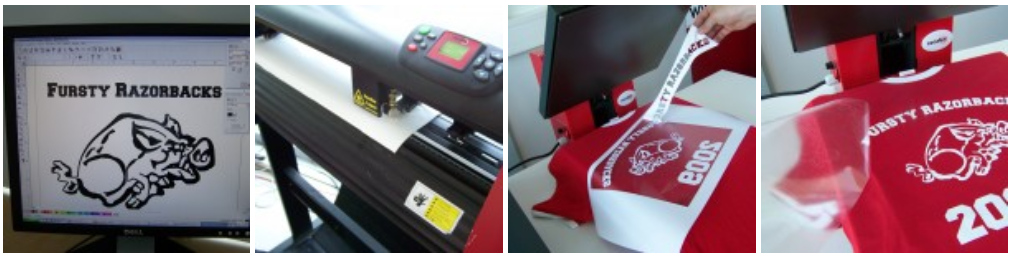
However, the most common method for durable textile printing is textile finishing using flock and flex films. In order to customise textiles using these films, you also need a cutting plotter, which cuts out the lettering, logos, shapes etc. – created in a graphics programme on the computer – from the flat material. After weeding, the design made from flock or flex film is pressed onto the textile using a heat transfer press.
Flex film is known as a good all-rounder; it is suitable for most types of textile printing and allows for the printing of simple designs. Flock film, on the other hand, stands out for its pleasant, fluffy feel.
On your marks, get set, go!
Once you’ve made all the necessary purchases, you’re ready to get started! You can either teach yourself or find out how to use our equipment to best effect by attending our training courses and workshops. When it comes to the printing process itself, it’s important to determine the optimum pressure and temperature for each combination of film and material. Test prints are helpful here. You should also ensure you have the right combination of material to be printed on and the appropriate film – then nothing will stand in the way of a profitable side business!
You’ll find our blog articles on other possible printing methods via the links below:
> Textile finishing with sublimation transfers
> READY vs. SCREEN PRINTING – a comparison of textile transfers
Suitable products and starter kits in the YOW! Shop:
Flex/flock printing
> 30cm Professional Box for textile finishing
> 60cm professional box for textile finishing
> Flex and flock films
Toner transfer
> Little Ghost Vol. 2 white toner printing starter set, A4
> Big Ghost white toner printing starter kit, A3
> Little Ghost Vol. 2 white toner printing starter kit, A4 + Secabo TC5 SMART heat press
> Big Ghost white toner printing starter kit, A3 + Secabo TC7 SMART transfer press
Sublimation
> Sublimation A4 ProfiBox
> Sublimation Starter Kit for Mug Printing
> Sublimation items, such as mugs, jigsaw puzzles and cushion covers
Textile transfer services
> Go to the READY printing service configurator
> To configure the SCREEN PRINTING printing service