Getting creative with self-adhesive films – we’re giving a water carafe a new look with sandblasting!
With Ritrama sandblasting film, lettering and graphics can be quickly and easily applied to objects using sandblasting.
What is sandblasting?
Sandblasting is a form of surface treatment for a material or workpiece. In this process, an abrasive (glass beads, plastic beads, sand) is blown onto objects using compressed air or a centrifugal wheel to remove rust, paint or similar substances, or to roughen their surfaces and enhance their appearance. The pressure is generated by a compressor, whilst the blasting material itself is drawn in through a hose and accelerated via a Venturi nozzle system.
Where is the creative technology of sandblasting used in practice?
In practice, sandblasting is used in a wide variety of fields.
Cleaning metal components and electronic parts, or removing rust, paint residues, dirt or old plaster, are common but rather routine examples of its use.
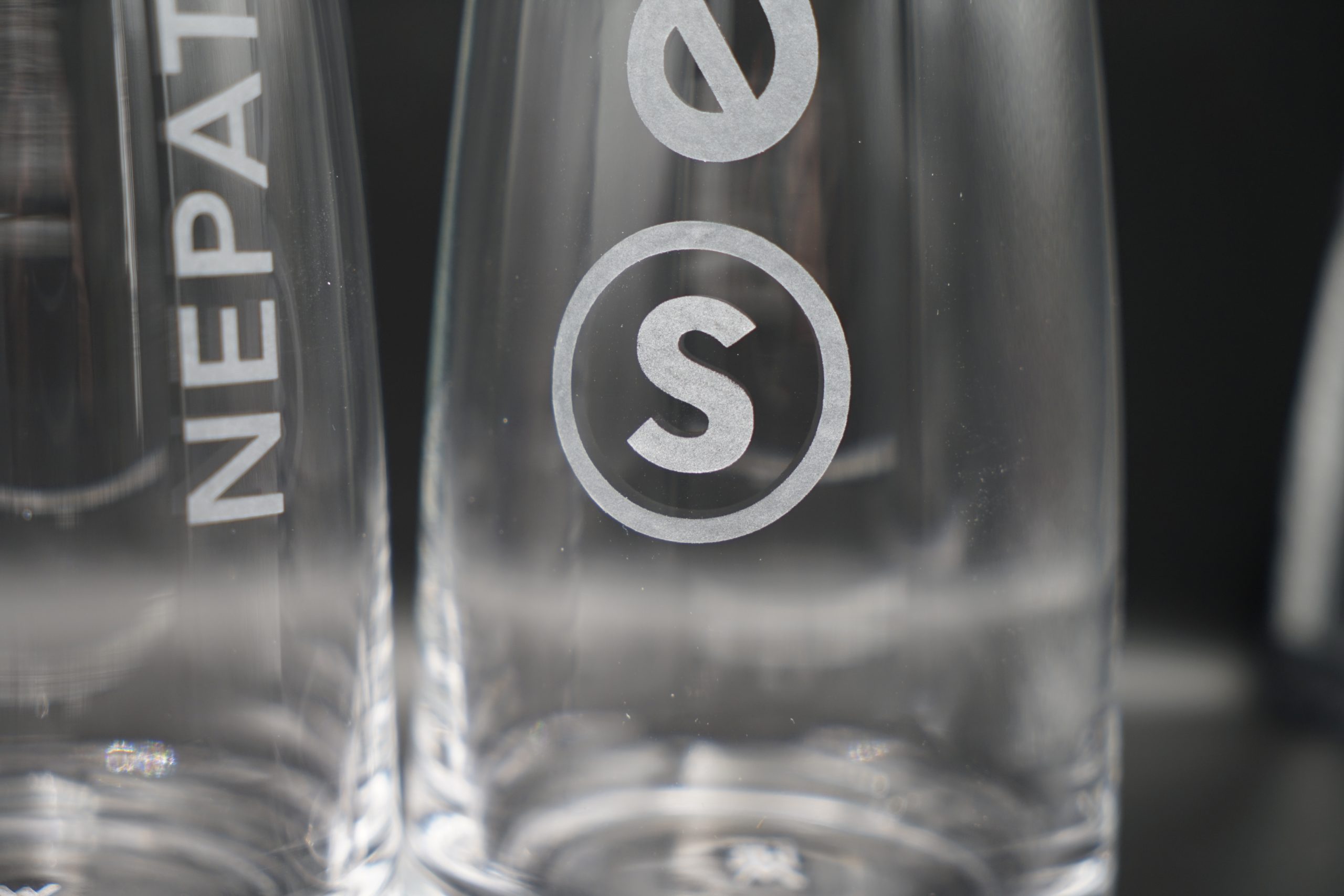
In addition, sandblasting can be used for many creative applications of this technology, such as matting and finishing surfaces, and marking glass, stone, tiles and other hard surfaces. We have used this technology ourselves. We wanted to mark our carafes with our company name so that it’s clear which ones belong to us and we don’t lose any more of them.
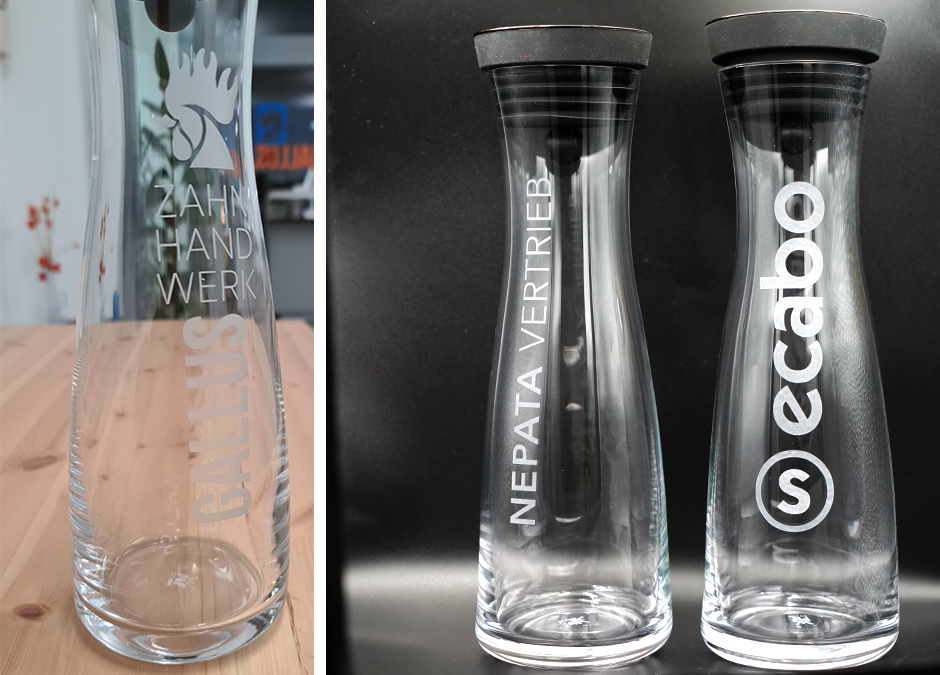
By using Ritrama sandblasting film, lettering or graphics can be sandblasted onto objects quickly and easily – the areas beneath the film are not affected by the abrasive and therefore remain undamaged.
How does sandblasting work?
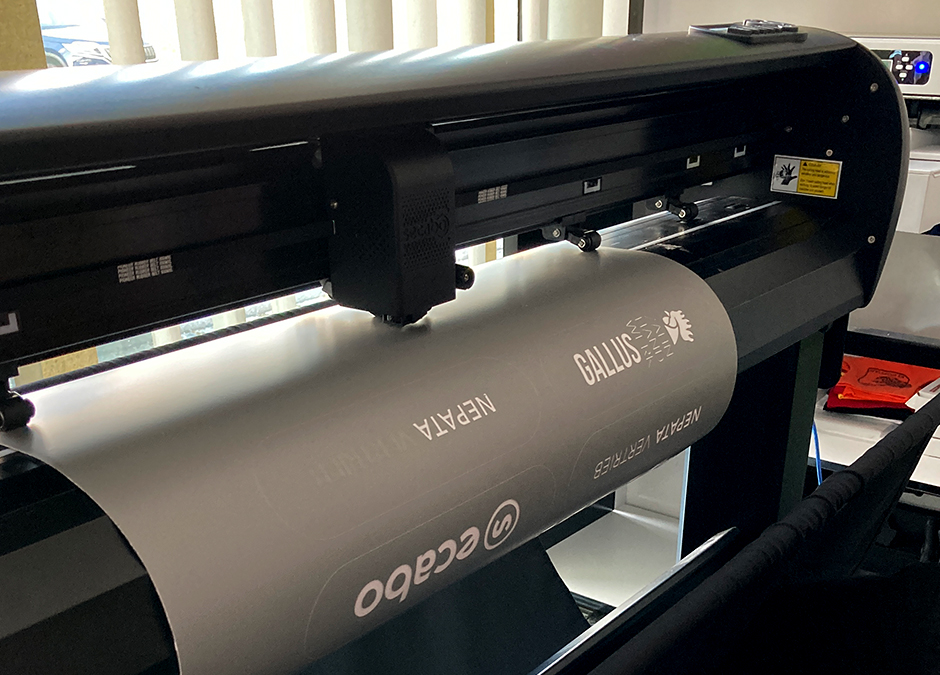
Before you can sandblast a specific motif, lettering or pattern onto materials such as glass, the following steps are required: First, create the design for your finish, as well as the plotting files. Next, a negative stencil must be produced, which is created, for example, using acutting plotter.
Once the stencil has been plotted and weeded, it can be applied to the object to be sandblasted. It is important that the part of the surface which is not to be sandblasted is thoroughly masked off.
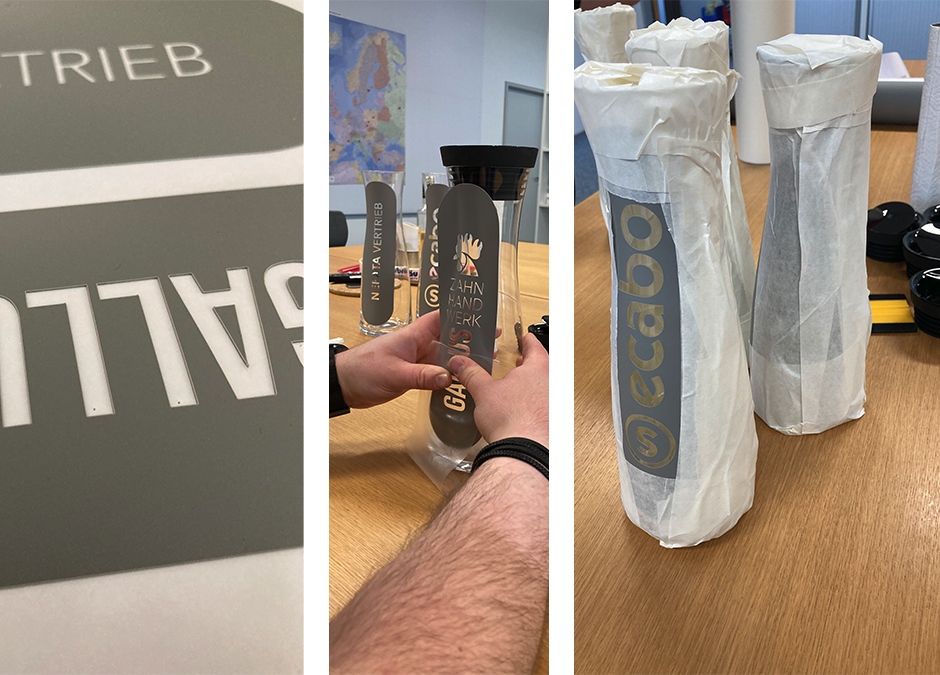
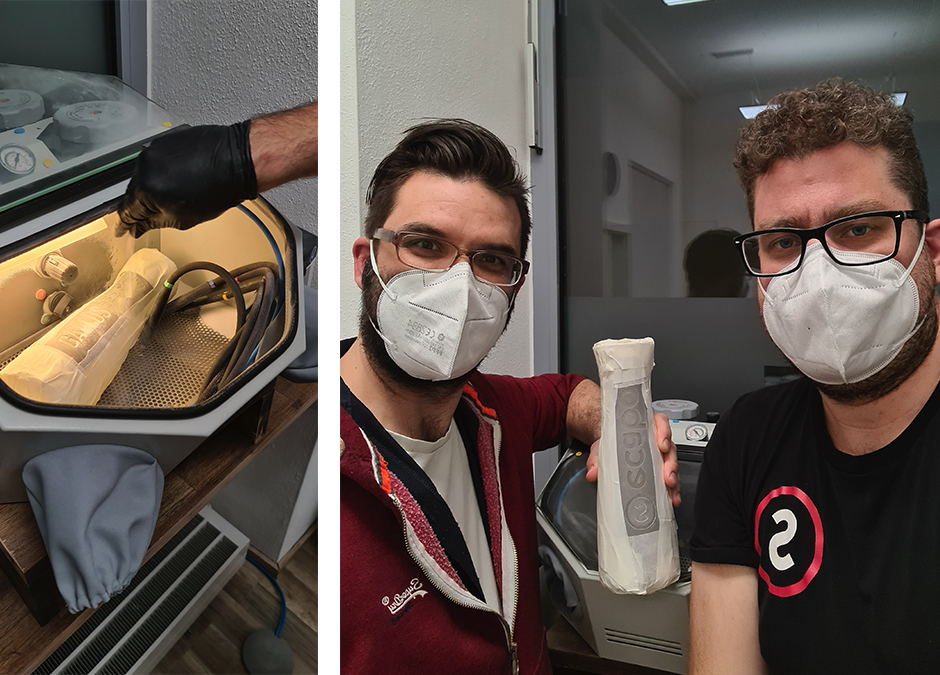
The sandblasting is then carried out in a special sandblasting booth. This process does not usually take very long; for a 0.3-litre glass, you should allow about 1 minute. The film is then removed and the sandblasted item is thoroughly cleaned – and that’s it.
What are the advantages of creative sandblasting technology?
- With this process, objects with any surface texture can be treated, even in inaccessible areas such as recesses, notches or pockets.
- When working with glass, sandblasting can roughen the surface to such an extent that light is strongly diffused, creating an elegant visual effect. The surface appears milky in the treated areas and is no longer transparent.