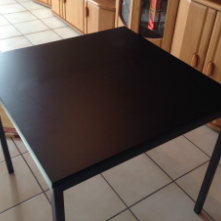
Spruce up your home: decorate your kitchen, doors and furniture with stickers
Is your flat showing its age, and have your kitchen, doors and furniture lost their lustre? Then spruce up your flat now by covering kitchen fronts, door panels, tables, chests of drawers and more with high-quality adhesive film! There are plenty of colours and designs to choose from!
As a little gift from YOW! to all our blog readers, here’s a 15 per cent discount voucher on all self-adhesive films for your upcoming renovation projects – valid up to and including 15 January 2014: UDXBG3UV
An old kitchen with a new lease of life
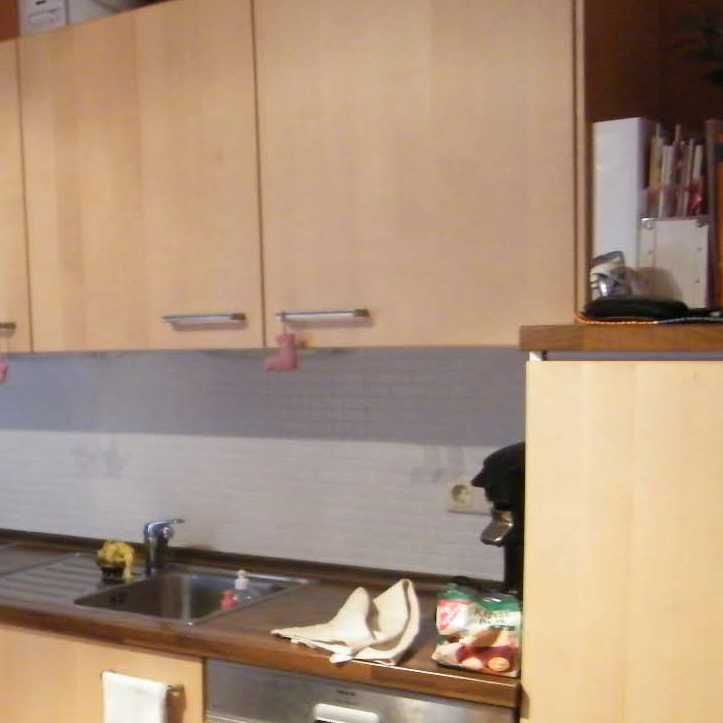
To give old kitchen fronts a new lease of life, simply re-cover the doors with adhesive film – ideally usingthe ‘wet application’method. We recommend the Ritrama PRO series or Oracal 751C for this. For special designs and patterns, we recommend Oracal 975 Structure Design.
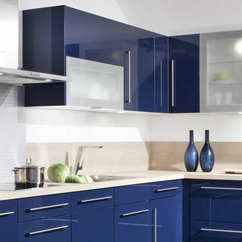
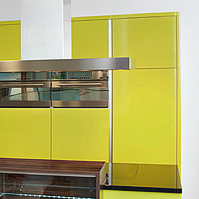
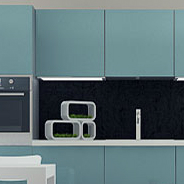
When applying film to a surface over its entire area, it is vital that the surface to be covered is thoroughly cleaned and degreased so that the film adheres completely and is free of debris. It is advisable to test the material on an inconspicuous area before proceeding. As a rule, however, the film adheres to all surfaces without any problems and can be removed at any time without leaving any residue. Any adhesive residue could also be tackled with a special adhesive remover, but if you’re applying the film to a kitchen, it’s usually for a good reason.
Useful tools include a spray bottle containing a mild washing-up liquid solution forwet application(simply add 1 drop of washing-up liquid to 1 litre of water, e.g. in a spray bottle), a squeegee (or, if necessary, a credit card or a shower screen squeegee) for smoothing and spreading the film, and a small needle for pricking any bubbles.
When applying the film, it is advisable to remove the fronts where possible, though applying it to a fitted kitchen is also no problem. Handles and knobs should be removed. Moisten the cleaned and degreased surface evenly with the washing-up liquid solution, then place the appropriate film loosely over the surface and align it. The great advantage of wet application is that the film can be easily moved into the correct position. Once this has been achieved, simply press the film down from the centre outwards towards the sides and smooth out the water with a plastic squeegee. Use the needle to prick any bubbles that may have formed. The surface should be used with care until the water has completely evaporated, to prevent the film from accidentally peeling off, particularly at the edges.
Once the film has dried, the kitchen is ready for immediate use; the surfaces covered with the film are just as robust and suitable for everyday use as before. And, of course, they can be cleaned too…
Re-covering doors, door leaves and door frames
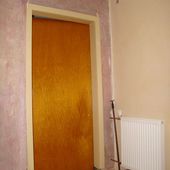
Much like kitchen fronts, door leaves can also be enhanced by removing the door leaf, taking off the handles and applying the new film to the cleaned door. The same procedure can be followed for door frames, although these usually need to be covered whilst still fitted. We also recommend theRitrama PRO seriesorOracal 751C as suitable self-adhesive films for this purpose. For special designs and patterns,Oracal 975 Structure Designis recommended.
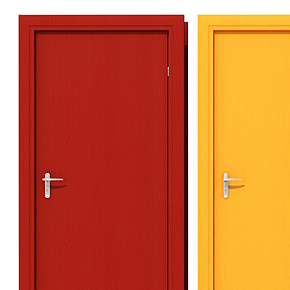
The bonding technique is the same as for the kitchen fronts described above.
Re-upholstering furniture
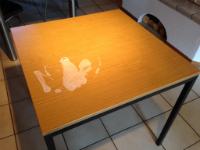
Following a similar approach, chests of drawers, tables, cupboards, TV stands and much more can also be given a ‘new lease of life’ and bring you fresh joy once again.