Tips and tricks for textile transfers that adhere perfectly
There are many different types of textile transfers. Here are a few potential sources of error, along with solutions for ensuring your transfers adhere perfectly.
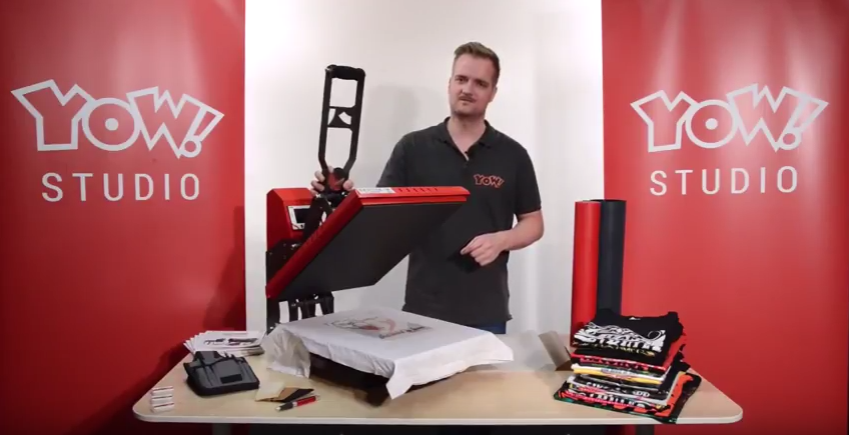
There are many different types of textile transfers: transfers onto thin T-shirts or thicker jumpers, transfers using clamshell presses or pneumatic presses… As there are different parameters to take into account in each case, a variety of factors determine whether a transfer works as intended or whether problems arise, such as the transfer failing to adhere.
Fortunately, the causes of these problems are often easy to identify and rectify. We have listed a few possible sources of error and influencing factors, along with their solutions, here.
Transfer press not yet heated up
One potential problem with transfer printing is a heating plate that has not yet been properly heated. The thermocouple, which transmits the temperature of the heating plate to the controller, is located within the heating plate but not on its surface. Consequently, the surface temperature may differ from the temperature indicated by the controller. However, it is the surface temperature that comes into direct contact with the fabric and is therefore particularly important for a successful transfer. So, once the desired temperature has been reached at the thermocouple, it must first spread across the entire surface of the plate.
We recommend: After the first signal indicating that the heat press has heated up, simply wait a little longer until the heat has actually spread across the entire surface.
Time-consuming mass production
During mass production, a press may lose a significant amount of energy, causing the initial temperature to drop. This can lead to unexpected problems arising during the production run. With clamshell presses and double-plate transfer presses, there is the additional problem that the energy from the heating plate does not necessarily heat the base plate as well, which means that energy can escape from there. Whilst clamshell presses tend to be warmer at the back than at the front, in a double-plate press only one base plate is heated.
Our tip: Always keep an eye on the controller and ensure that the machine returns to the correct temperature. With clamshell presses, you can occasionally close the lid whilst the machine is heating up and use the set transfer cycle. This ensures more energy is transferred to the base plate and improves transfer quality.
Manufacturer’s specifications for transfer printing: guidelines only
Manufacturers of textile transfer materials often specify the pressure in bar. However, this value relates to a specific pneumatic transfer press; without further details, this value is therefore not useful to the user. This applies in particular to clamshell presses. It is advisable to set the pressure so that the transfer press can be closed with a certain amount of effort, but without using force. Too much or too little pressure can still lead to problems, so it may be advisable to carry out several tests before starting mass production. If the transfer press closes too easily, the contact pressure is too low. If the contact pressure is too high, however, the hot ink may leak out the sides during the transfer.
Our recommendation: Test to find the optimum pressure for your transfer press to achieve the best possible results.
Thickness of the fabric and interlayers
In textile transfer, it makes a big difference whether the chosen fabric is a thin T-shirt or a thicker sweatshirt. Thicker textiles draw more heat from the heating plate during the transfer than a thin textile. Consequently, with such textiles, you will generally need to extend the transfer time, as it takes a certain amount of time for the press to reach the desired temperature. Even when using cover films or thicker silicone covers – for example, to protect the heating plate and the fabric or to compensate for unevenness such as seams – these intermediate layers result in a longer transfer time. This is because energy is also conducted into these highly insulating materials.
Expert tip: Adjust the transfer time to suit the thickness of the fabric and the cover films used. The thicker the fabric and the more intermediate layers there are, the longer the transfer time.
Environmental factors
Open doors and windows can be the cause if transfer prints do not adhere sufficiently. Draughts can cause energy to be lost from the transfer press, thereby altering the transfer times. In this case, sufficient heat and its even distribution are no longer guaranteed.
Tip: Prevent draughts and ensure a consistent room temperature when printing on textiles to prevent energy loss or your machine from overheating unnecessarily
> Watch this blog post as a YOW! video on YouTube
__________________________________________________________________________________
As a general rule, manufacturers’ specifications regarding temperature, time and pressure for specific transfers should always be regarded as guidelines only, as these may well vary depending on the type of transfer press used or other environmental factors. Factors such as high humidity, ambient temperatures and transfer presses that do not heat up evenly can lead to variations. It is best to carry out tests in advance to find out which parameters are right for your textile printing, even if these differ from the specified guidelines.
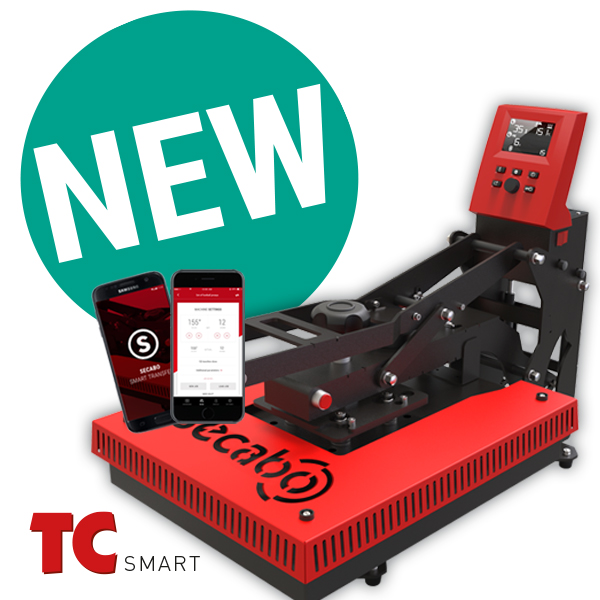
Or simply use the Secabo TC SMART transfer press with Bluetooth and the Transfer App, which offers a comprehensive database of functions.
> Click here for the blog post about the new Secabo SMART heat transfer press series + app