Sublimation transfer – Colourful creations on textiles and accessories
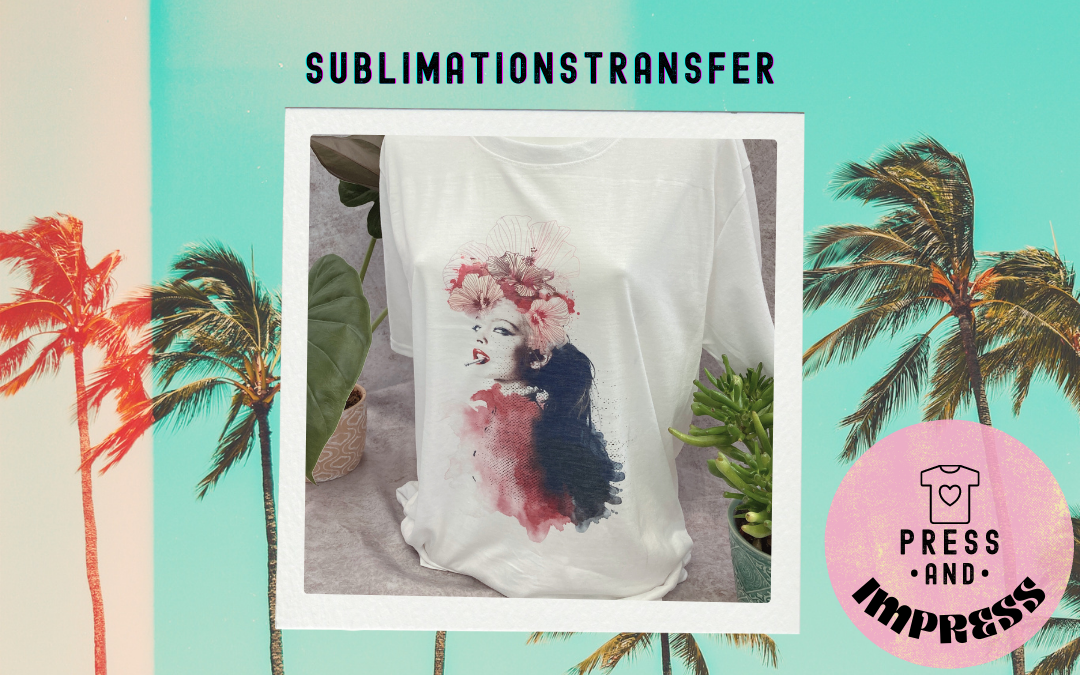
Would you like to enhance your clothes with vibrant colours and unique designs? Sublimation transfer offers a fascinating way to transfer images and motifs directly onto textiles or accessories. In this article, you’ll learn all about the advantages and limitations of this innovative process, how the prints are applied to the fabric, and the exciting possibilities it opens up.
What is sublimation transfer?
Sublimation transfer is a printing process in which special inks are printed onto sublimation paper and then transferred onto the fabric using heat and pressure. During this process, the ink turns into a gas and penetrates directly into the fibres of the fabric, resulting in a durable and photorealistic print . This process is particularly suitable for polyester textiles or polymerised items.
Advantages of sublimation transfer
- Photorealistic prints: Sublimation enables high-resolution, photorealistic designs with vibrant colours and fine details.
- Soft feel: The printed designs feel comfortable against the fabric, as the ink is absorbed into the fibres and does not form an additional layer.
- High durability: Sublimation prints are extremely durable and can withstand frequent washing and heavy wear.
- Versatile application: From T-shirts and sports shirts to cushions and bags – sublimation works on a wide range of textiles and other polyester items.
- No visible transitions: As the ink blends directly into the fabric, there are no visible transitions or layers.
Limitations of sublimation transfer
- Limited choice of materials: Sublimation only works on polyester textiles or polymerised surfaces.
- White colours on dark textiles: White colours cannot be printed directly onto dark textiles, so special transfer films are required.
- Complex materials: Textured materials or textiles with special coatings can affect the print result.
How is the sublimation transfer process carried out?
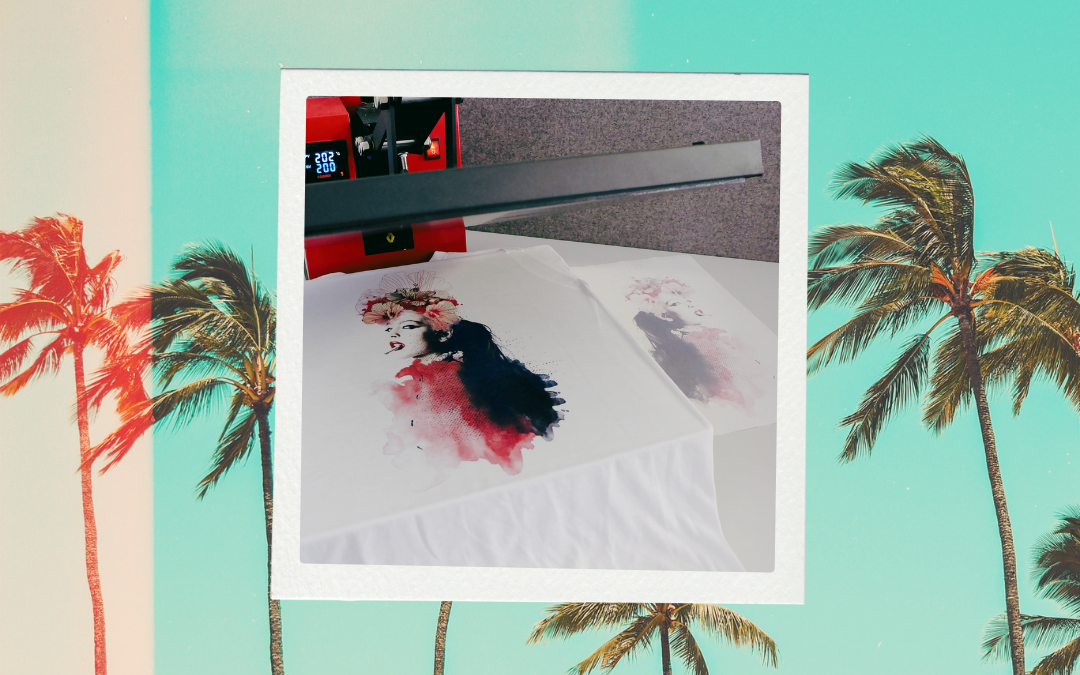
To create your own personalised sublimation design, create the image in the size of your choice. You can now print your design yourself onto special transfer paper using sublimation inks. The EPSON SureColor SC-F100 sublimation printer, with the appropriate inks, is best suited for this. The paper is then placed on the fabric and put into a heat press, where heat and pressure are applied. The heat causes the ink to turn into a gas and penetrate the fibres of the fabric. Once cooled, the design is permanently fixed to the fabric and is wash-resistant.
Examples of applications for sublimation transfer
Sublimation transfer offers a wide range of possible applications:
- Sportswear: Print your team’s colours and logos onto shirts and tracksuits.
- Home décor: Design personalised cushion covers or bed linen to create a personalised and cosy home.
- Promotional items: Print bags, caps or aprons with your company’s logo for effective advertising.
- Gifts: Surprise your loved ones with personalised T-shirts or gift items.
Pressing and washing instructions
- Pressing instructions: The ideal temperature for sublimation transfer is 190 °C for approximately 45 seconds, using medium pressure.
- Washing instructions: To ensure the prints last, it is recommended that you wash the garments inside out and tumble dry them at a low temperature. Ironing should be done on the inside of the garment.
Sublimation transfer is a fascinating method for creating colourful and long-lasting prints on textiles. Whether for sport, leisure or advertising – with sublimation, you can bring your unique and personalised designs to life.
Here you’ll find informationon the other textile transfers we offer at YOW!
If you have any further questions, please feel free to contact our sales team at any time on 0800 – 9697467 or atmail@y-o-w.com.