DTF – Direct-to-film printing for stunning textiles
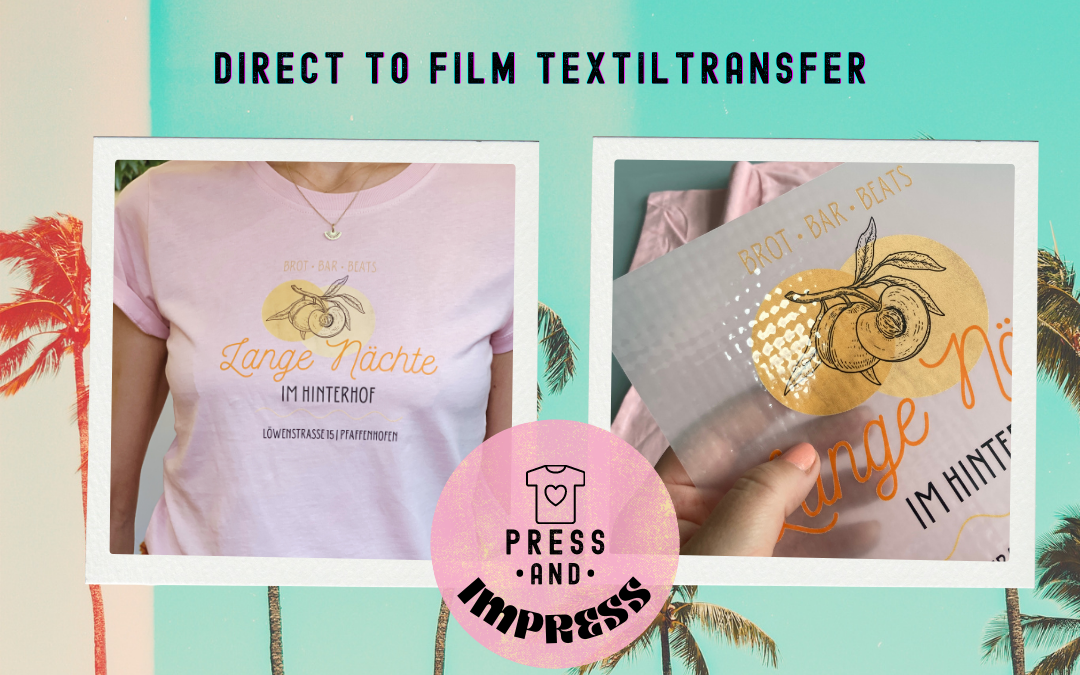
DTF is a modern printing method in which the desired design is printed directly onto a special film.
Would you like to jazz up your clothes with personalised designs and are you looking for an innovative printing method? DTF, also known as Direct to Film or Direct to Foil, is an up-and-coming technology that makes it possible to print stunning designs directly onto textiles. In this article, you’ll learn all about the advantages and limitations of this process, how the prints are applied to the fabric, and what kinds of applications can be achieved with it.
What is DTF?
DTF is a modern printing method in which the desired design is printed directly onto a special film. The design is then coated with an adhesive layer, which transfers onto the fabric. DTF offers great flexibility in design and allows printing on a wide variety of fabrics, including cotton, polyester and blended fabrics. If you’d like to know more about the differences between DTF and DTG, read this blog post!
Advantages of the DTF process
- High print quality: DTF enables the printing of photorealistic designs with vibrant colours and fine details.
- Versatile application: The process works on a wide range of textiles, including dark fabrics.
- Design flexibility: Whether complex designs, colour gradients or lettering – DTF offers great creative freedom.
- Soft and durable prints: The printed designs feel comfortable against the skin and are hard-wearing.
- Short production time: DTF enables fast and efficient production, which is particularly advantageous for small print runs.
Limitations of the DTF process
- Not suitable for all materials: DTF does not work on materials such as leather, nylon or silk.
- Pre-treatment required: For some textiles, pre-treatment is necessary to achieve optimal print results.
- Higher printing costs for small print runs: Compared with mass production, printing costs for small print runs may be slightly higher.
How is the DTF process implemented?
To create your own personalised DTF design, you first create the motif in the desired size and transfer it onto the special DTF film. The adhesive layer is then applied, so that the design is ready to be transferred onto the fabric. By applying heat and pressure using a heat press, the design is transferred onto the fabric, where it takes on a long-lasting and striking appearance.
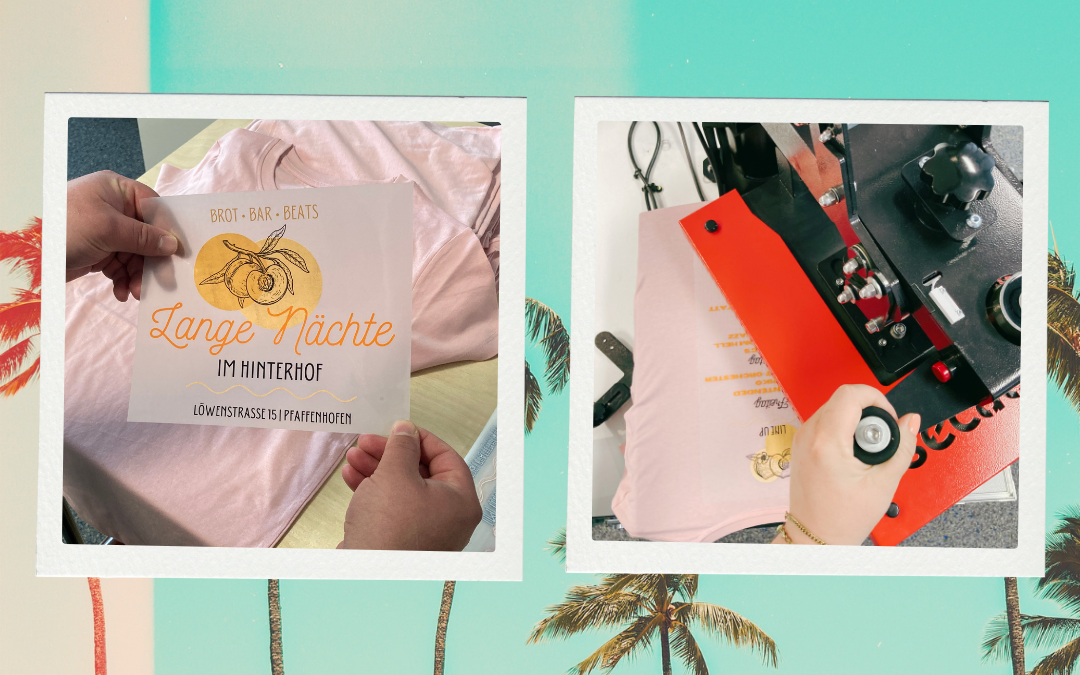
Examples of DTF applications
DTF offers a wide range of creative possibilities and is suitable for various applications:
- T-shirts and hoodies: Personalise your clothes with unique designs and lettering.
- Caps and hats: Design bespoke headwear for your team or club.
- Bags and rucksacks: Add a personal touch to your bags and rucksacks.
- Home textiles: Print on cushion covers or bed linen to create a cosy home.
Pressing and washing instructions
- Pressing conditions: The optimum temperature for DTF transfer is between 160 °C and 180 °C for approximately 20 to 30 seconds at medium pressure.
- Washing instructions: To ensure the prints last, it is recommended that you wash the garments inside out. Tumble dry at a low temperature, and when ironing, protect the garment by ironing it inside out.
DTF is an impressive printing method that allows you to transfer customised, photorealistic designs directly onto textiles. Let your creativity run wild and design unique garments that are a true expression of who you are!
Here you’ll find informationabout the other textile transfers we offer at YOW!
If you have any further questions, please feel free to contact our sales team at any time on 0800 – 9697467 or atmail@y-o-w.com.