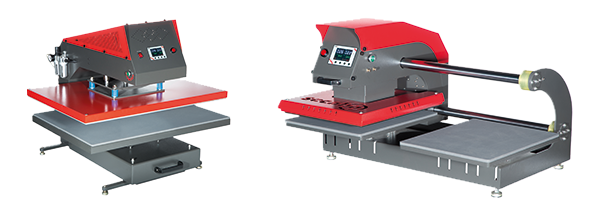
Pneumatic transfer presses: the TPD7 and TP10 from Secabo
Pneumatic transfer presses offer numerous advantages over the more common toggle presses. You can read about what these are on the YOW! blog.
Transfer presses are a popular tool when it comes to transferring custom designs onto a wide variety of materials. There is a wide range of transfer presses available, from clamshell presses and swing presses to machines specifically designed for printing on mugs and caps. Pneumatic transfer presses, however, are particularly efficient and versatile. We explain how they work and what advantages they offer over the more common clamshell press.
Heat transfer press: What is it?
Transfer presses are used to print custom designs onto a wide variety of materials, such as ceramics, plastic and wood. This is achieved by applying heat and pressure. Transfer presses are particularly popular in textile finishing, as they make it incredibly easy to work with flock foils, flex foils, as well as toner and screen-printed transfers. The user can usually adjust the pressure and temperature individually to suit the specific printing project. This is necessary because cotton requires very different heat and pressure settings to polyester, for example. This is the only way to achieve optimal results.
Toggle presses: Ideal for beginners
Folding presses are a popular tool in textile printing, as they are highly space-saving and easy to use. This type of transfer press can be compared to a standard waffle iron: the item to be printed is placed on the base plate. The heating plate is then folded down onto the base plate using a lever. This makes it particularly easy to print the desired design onto T-shirts and other flat materials. Thanks to their user-friendly operation, clamshell presses are particularly suitable for those new to textile finishing. With the Secabo TC2, you get a high-quality entry-level model at an unbeatably low price.
Pneumatic transfer presses: Maximum productivity for professional results
Professional finishers, whose aim is to produce the highest possible volume in the shortest possible time whilst maintaining consistently high quality, are better off with a pneumatic transfer press. Unlike with a clamshell press, the contact pressure is generated here by compressed air. Although pneumatic transfer presses are slightly more expensive to purchase than the manual version, they do offer significant advantages. For instance, the pressure applied to the items being transferred is always consistent, regardless of whether you are printing on thin or thick material. This enables you to achieve consistently good results every time.
Furthermore, the effort required is significantly less than with clamshell presses, as you can carry out the pressing process comfortably using a two-hand operation. This is particularly noticeable with toner transfers, where you have to apply a great deal of pressure using conventional transfer presses. Instead of having to exert a great deal of physical strength, with pneumatic transfer presses you can simply and safely adjust the pressure using the pressure gauge. This ensures a very high degree of repeatability. Another advantage is that wear and tear is significantly lower with pneumatic transfer presses than with comparable hinged presses.
Secabo TPD7: The handy double-plate system
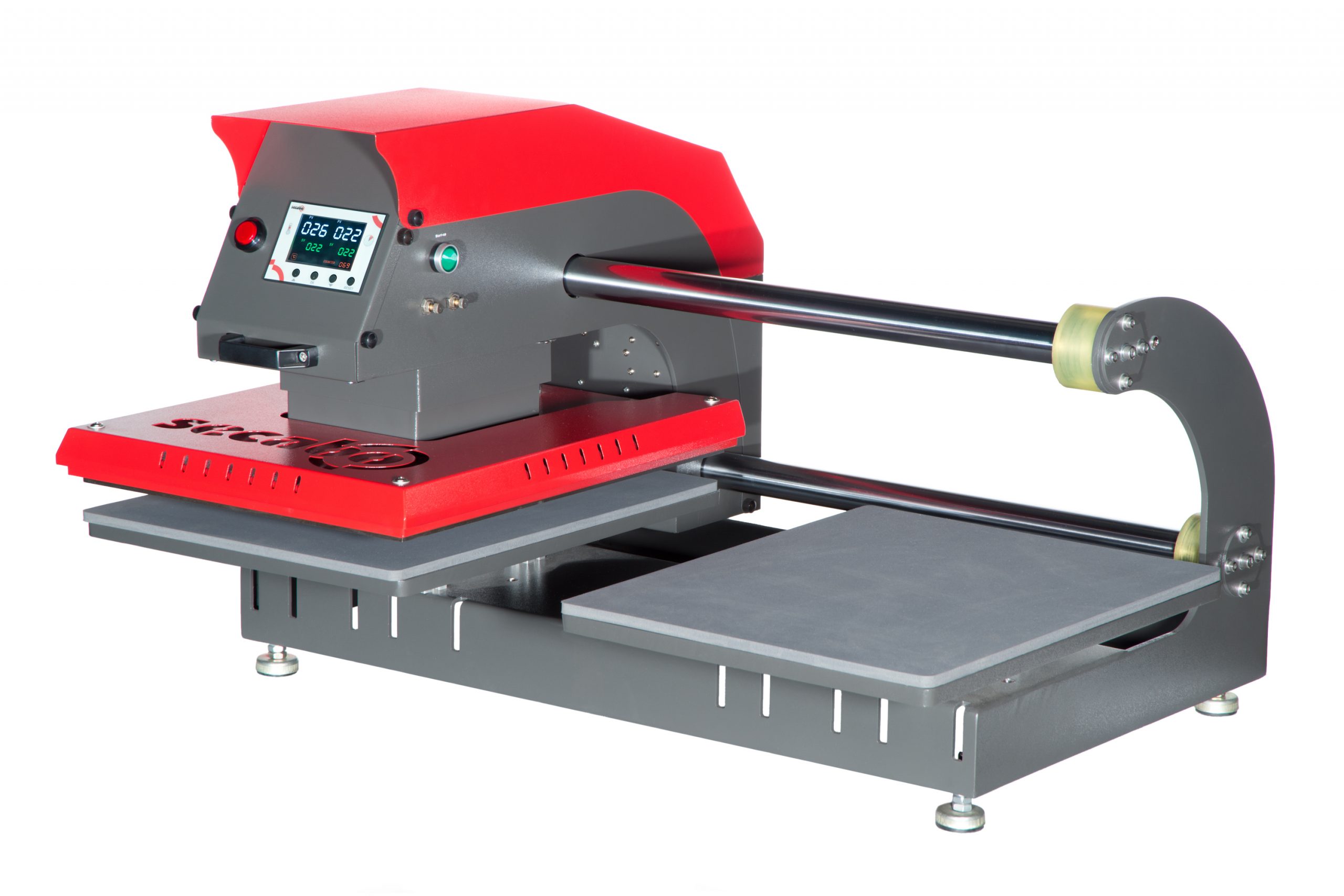
In the YOW! online shop, you’ll find a range of pneumatic transfer presses, including the Secabo TPD7 pneumatic double-plate press, which is particularly well-suited to handling large-format and extensive transfers. This is made possible by the two base plates, which allow you to work on two transfers simultaneously. Measuring 40 x 50 cm each, they offer a generous working surface. This enables you to achieve maximum throughput for your transfers. The heating plate is characterised by high heating power as well as good thermal capacity and heat distribution, whilst ensuring the highest level of safety for the operator. An additional protective plate above the heating plate protects the operator from burns. Temperature and pressing time can be conveniently controlled via the digital controller, allowing you to set maximum values of 225°C and 999 seconds. The setpoint and actual values are displayed for monitoring purposes. Furthermore, it is possible to interrupt the pressing process at any time at the touch of a button. This can be advantageous, for example, when pre-pressing textiles.
Secabo TP10: The workhorse for large-scale production runs
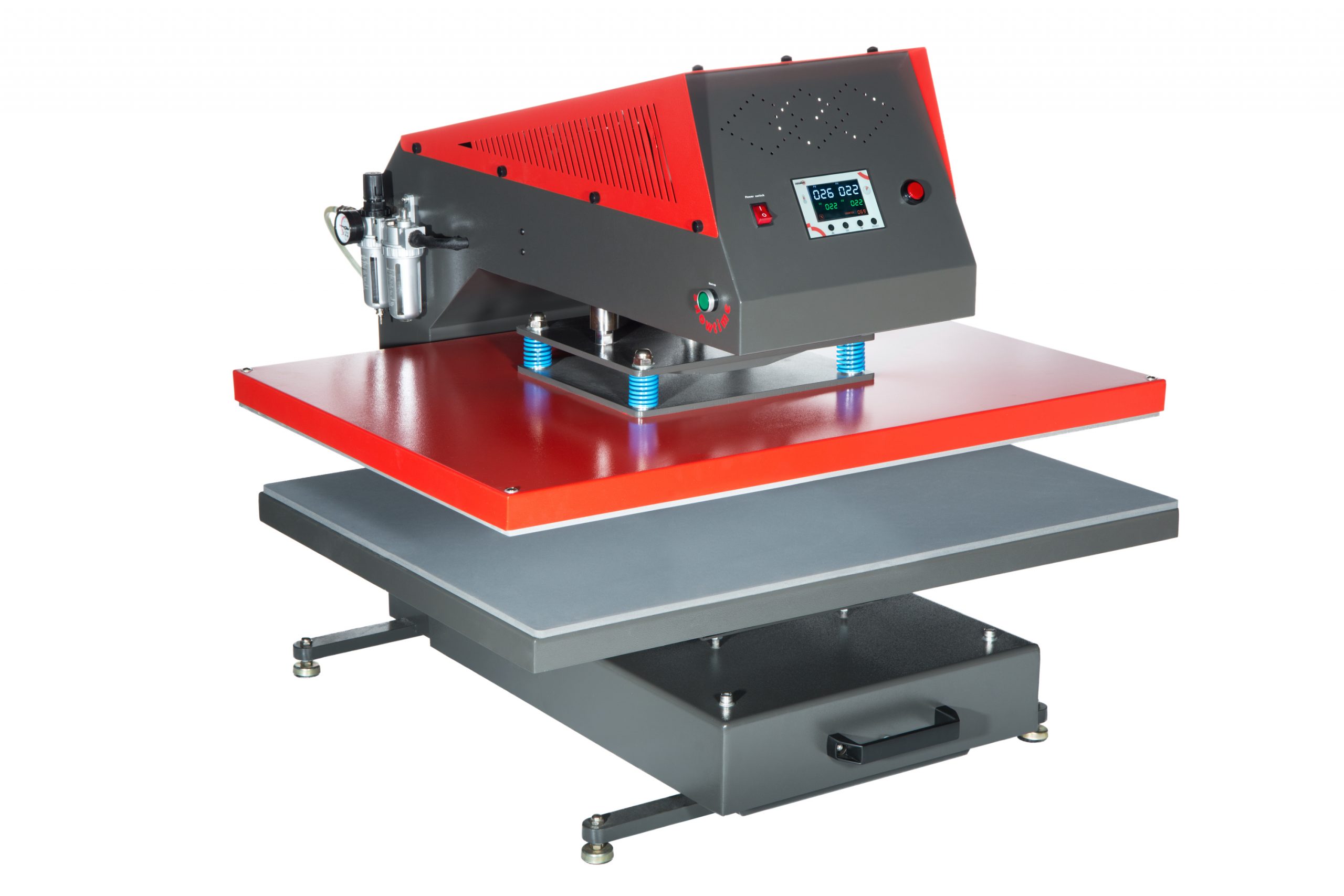
If the working area of the TPD7 is not yet sufficient for your needs, we offer the Secabo TP10 pneumatic transfer press as the ideal alternative for large-scale production runs. With a working area of 80 x 100 cm, the TP10 is one of the largest transfer presses in our range. This allows you to handle large-area transfers or several smaller items simultaneously. Even printing on large-format substrates such as flags and bed linen is no problem. The TP10 is fitted with an extendable base plate, which ensures comfortable and safe operation. This base plate is height-adjustable in two stages, allowing you to process your transfer items at a wide range of heights. Like the TPD7, the TP10 also impresses with its high heat capacity. This means nothing stands in the way of a high throughput of transfers. The TP10 is suitable for all standard heat transfer processes and for use in all areas of transfer technology.
If you are interested in one of our transfer presses or have any further questions, YOW! customer service will be happy to assist you. You can reach us on +49 (0) 8442 95840-40. We look forward to hearing from you!