Creative technology: textile finishing with rhinestones
The run-up to Christmas: the air is filled with wonderful scents and lights, everything sparkles and glitters, everywhere and more than ever before. Golden baubles, glowing candles and dazzling accessories as far as the eye can see. Even on textiles, a glamorous sheen is spreading – created by you and, of course, right on trend!
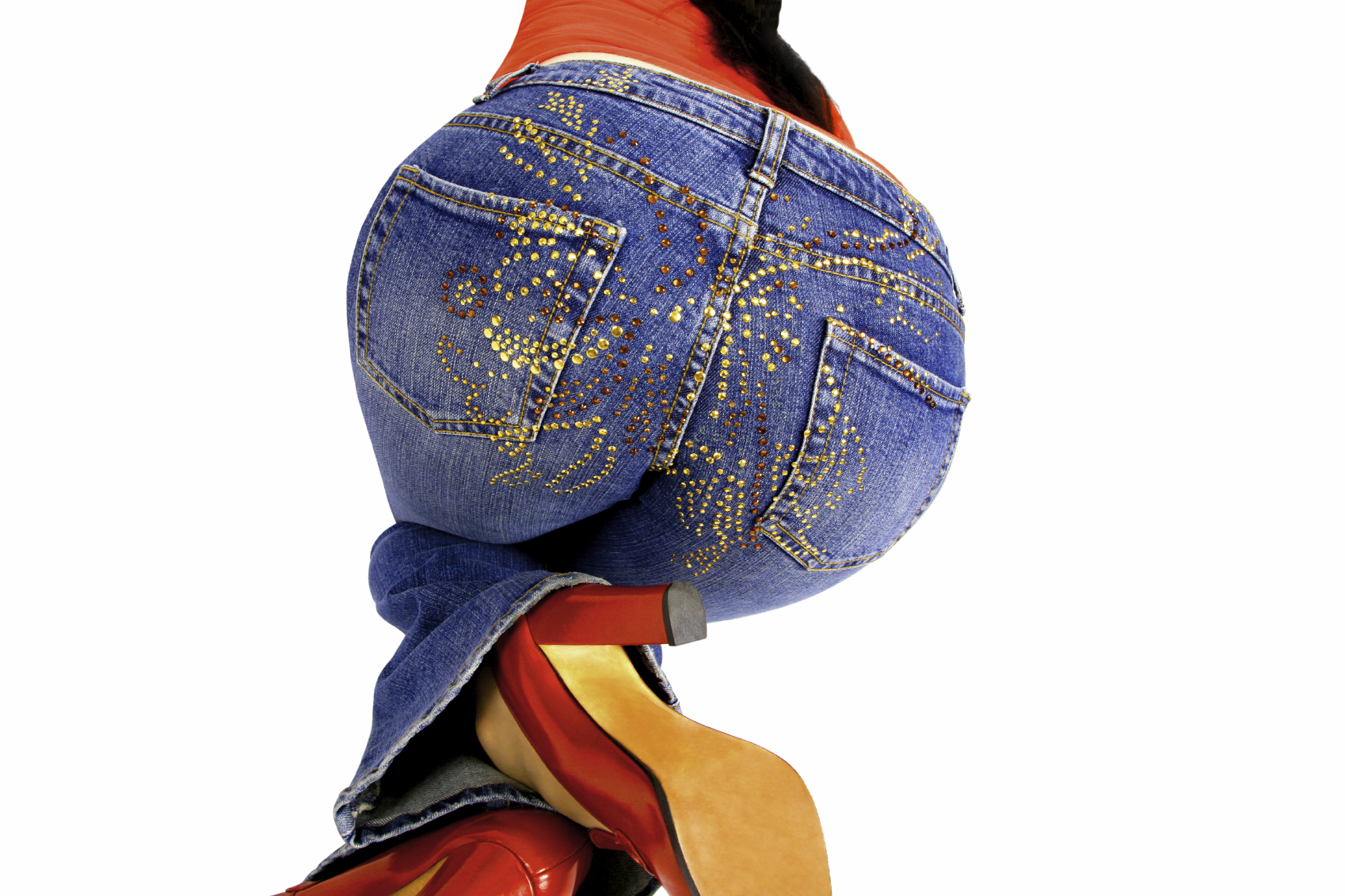
Want to embellish your own textiles with rhinestones?
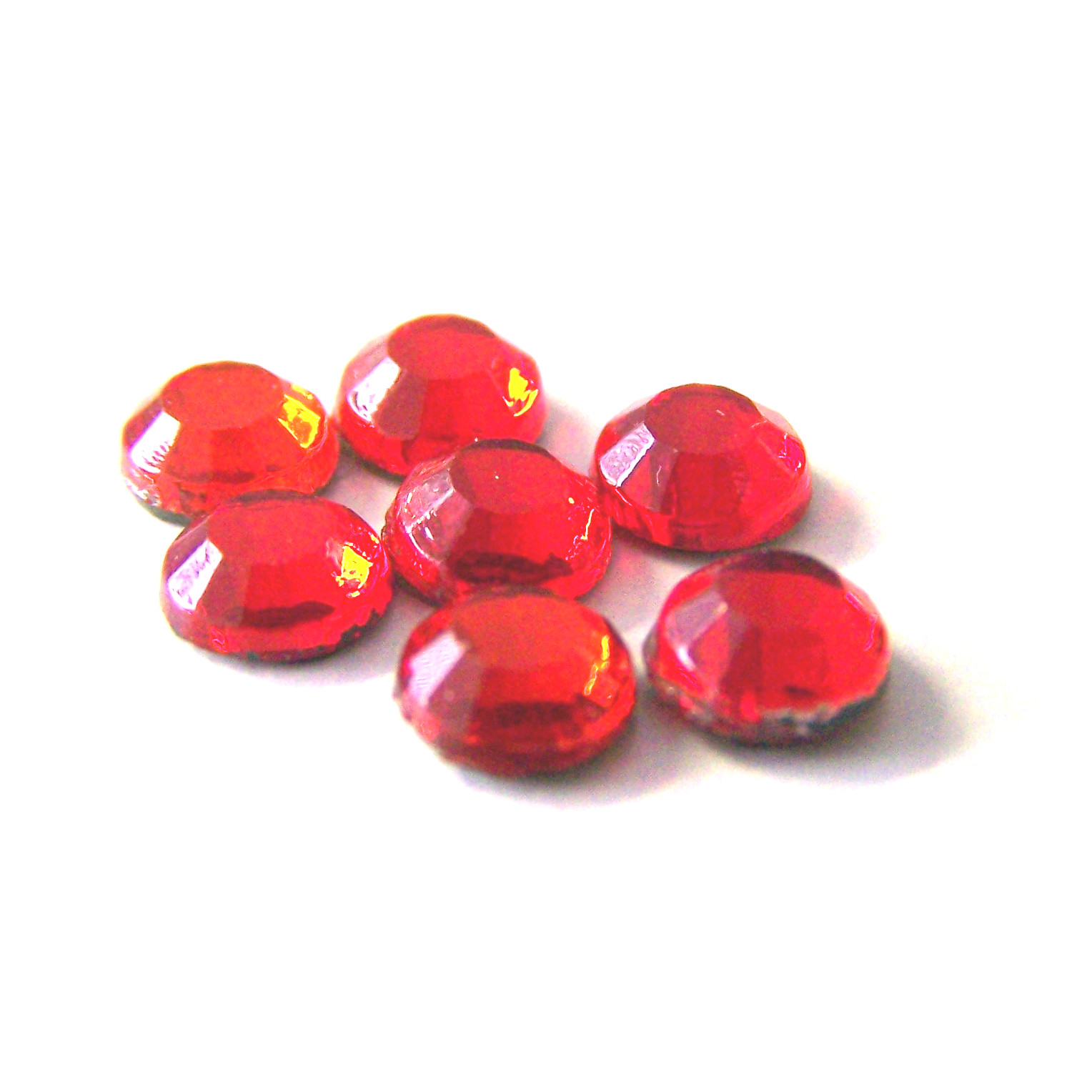
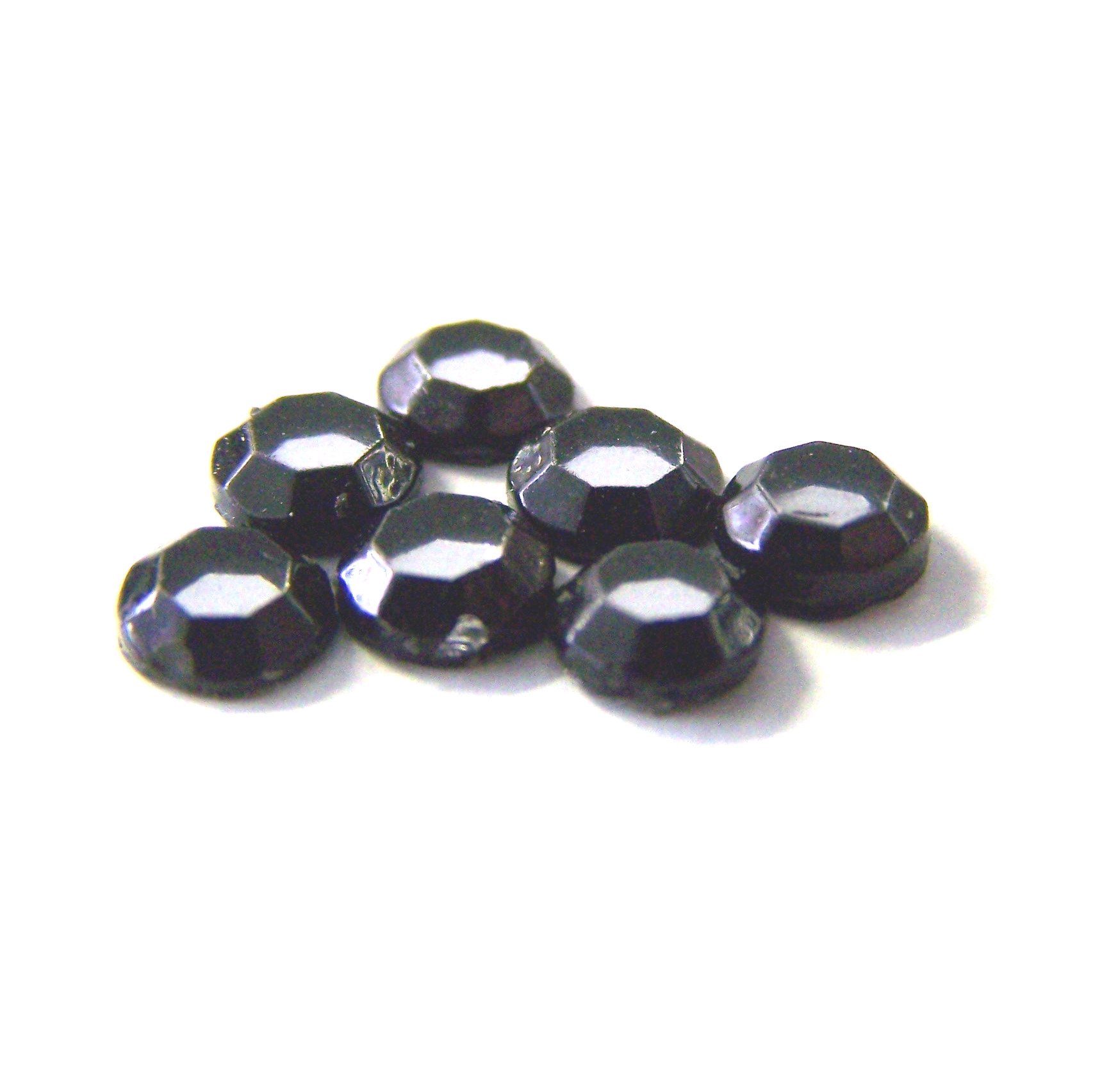
There are many types of rhinestones available for textiles, enabling virtually anyone, even those with no prior experience, to use them to creatively embellish all kinds of textiles. As well as self-adhesive rhinestones, there are rhinestones for sewing on, those with a clip, and others whose flat underside is coated with a heat-activated hot-melt adhesive, making them particularly suitable for professional yet straightforward application. This special adhesive liquefies once under the influence of heat and pressure and bonds with the fibres of the item being decorated as it cools.
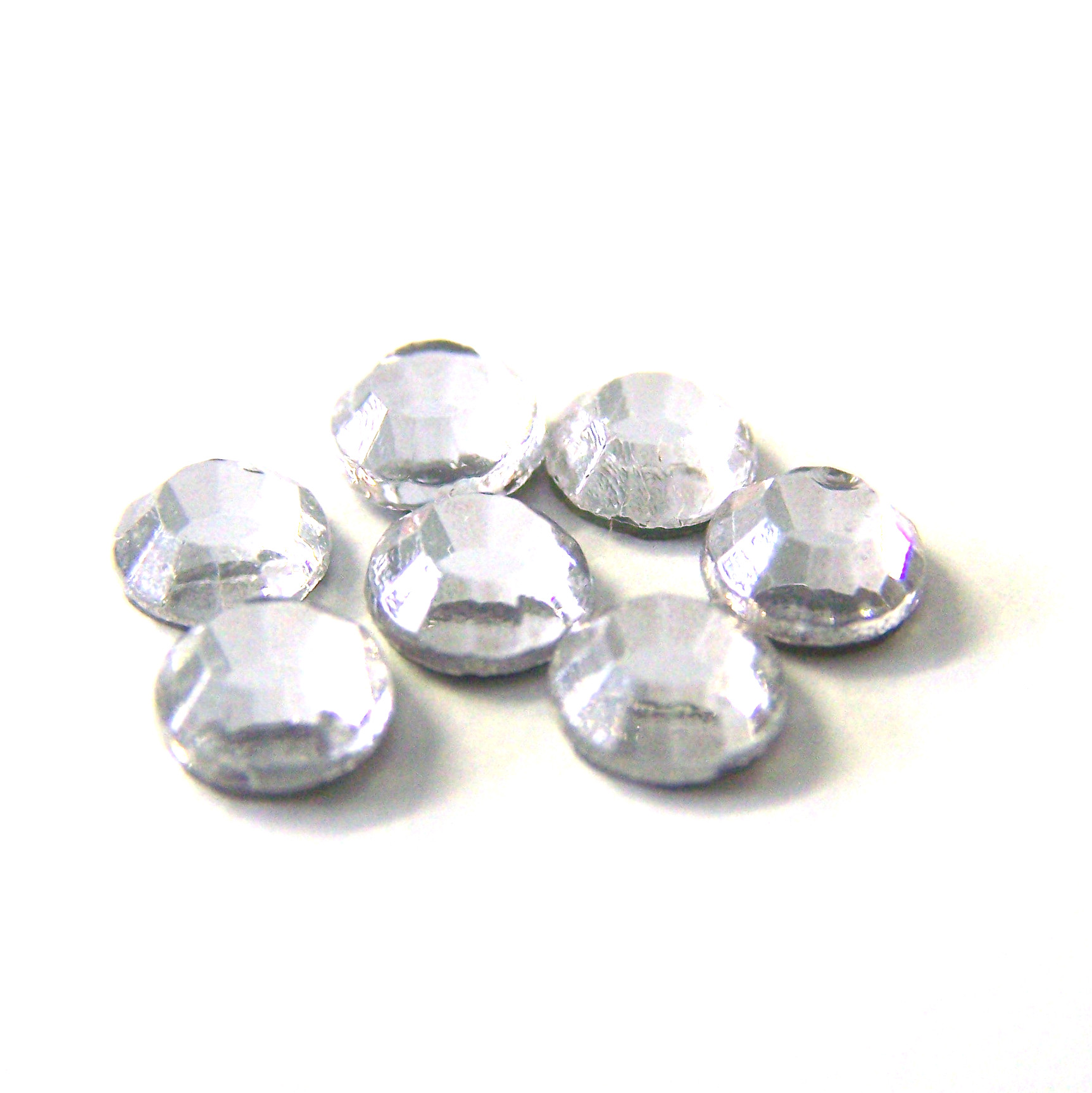
Countless colours, shapes and sizes of rhinestones are available on the market. Sizes are often denoted as ‘SS6’, ‘SS12’ etc., each corresponding to a specific diameter in millimetres; for example, ‘SS6’ corresponds to a diameter of approx. 2.0 mm. Rhinestones are often sold by the ‘gros’; one ‘gros’ is equivalent to approximately 144 stones.
How can I use rhinestones?
Rhinestones can either be used as an additional accent alongside other textile finishes, such as flock and flex films, or applied to textiles as standalone motifs, lettering or patterns.
Rhinestones as a highlight
When rhinestones are applied to textiles as ‘highlights’, they are placed individually by hand in the desired position and pressed using a transfer press. This type of finishing is usually carried out on a textile that already features lettering or similar and is intended to be further enhanced in this way. However, textiles that do not yet feature any lettering can also be embellished in this way, discreetly yet effectively.
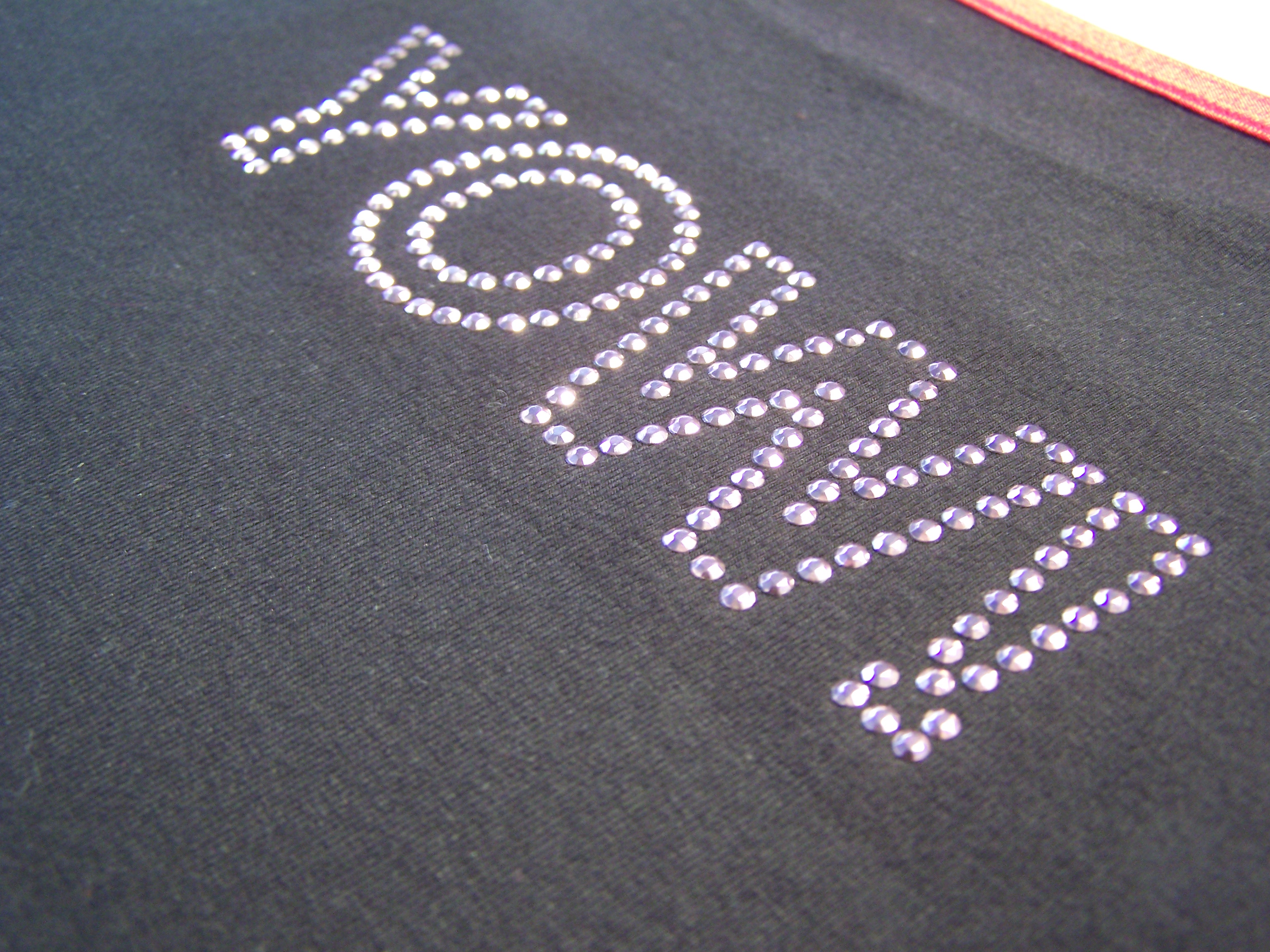
Designs or lettering featuring rhinestones
To apply designs or lettering using rhinestones to textiles, you first need a rhinestone stencil, which features recesses on a flat surface in the shape of the desired design, each one fitted for a single stone. These rhinestone stencils can be created in various ways.
One option is to create the stencil using an engraving machine; another is to plot the round recesses for the stones onto particularly thick films, such as sandblasting film. Once the design or lettering has been plotted, it is weeded and stuck onto a flat backing.
For single-colour designs, the individual rhinestones are then dabbed into the recesses of the stencil using a sponge or brush; for multi-colour applications, the stones are placed individually in the desired position using tweezers. Even for designs consisting of stones of different sizes, the rhinestones are set by hand.
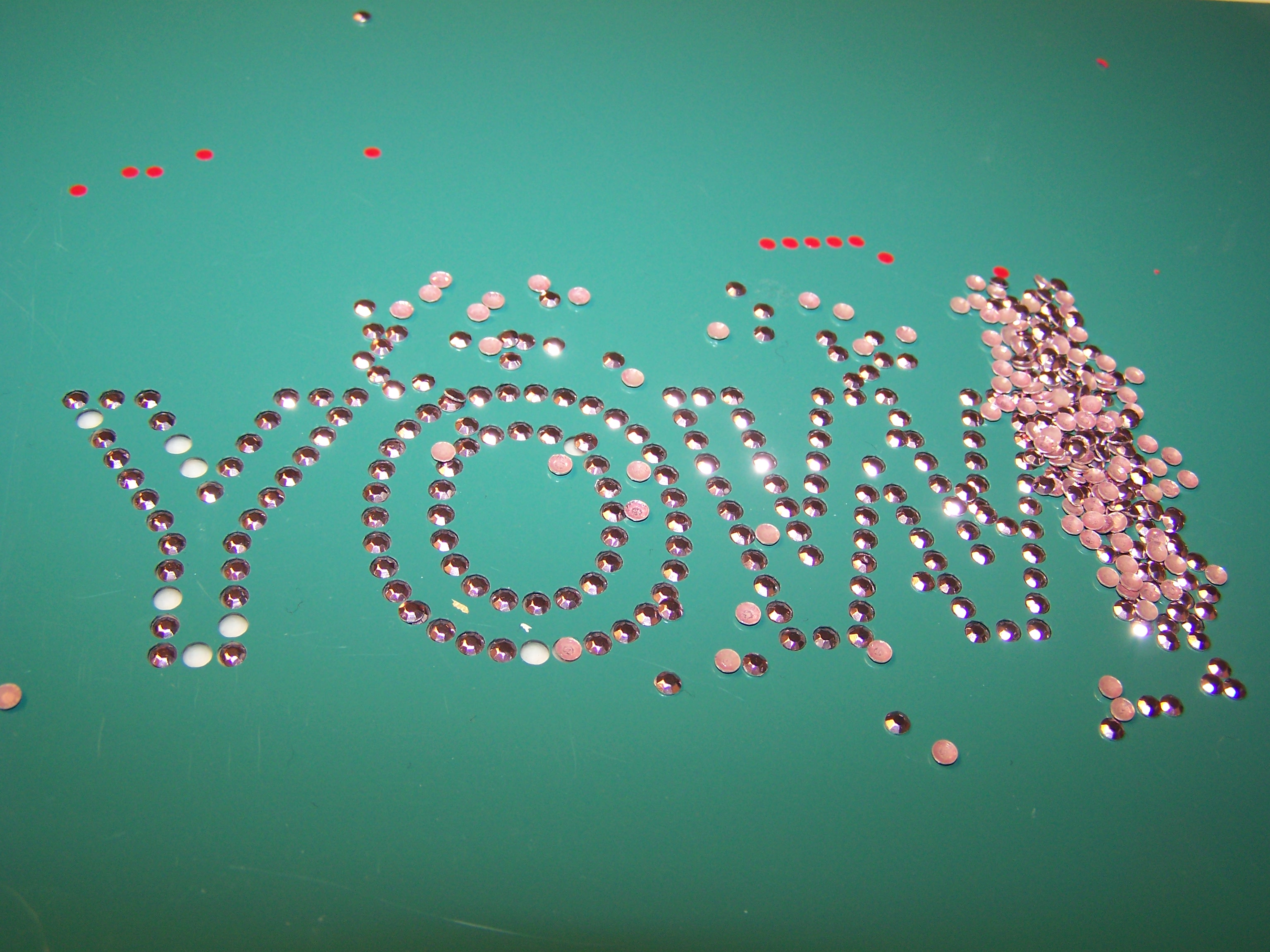
Once the design has been laid out, the rhinestones are picked up using a special transfer film – e.g. transparent film for heat transfer, 5m x 50cm – and positioned on the fabric in the desired location.
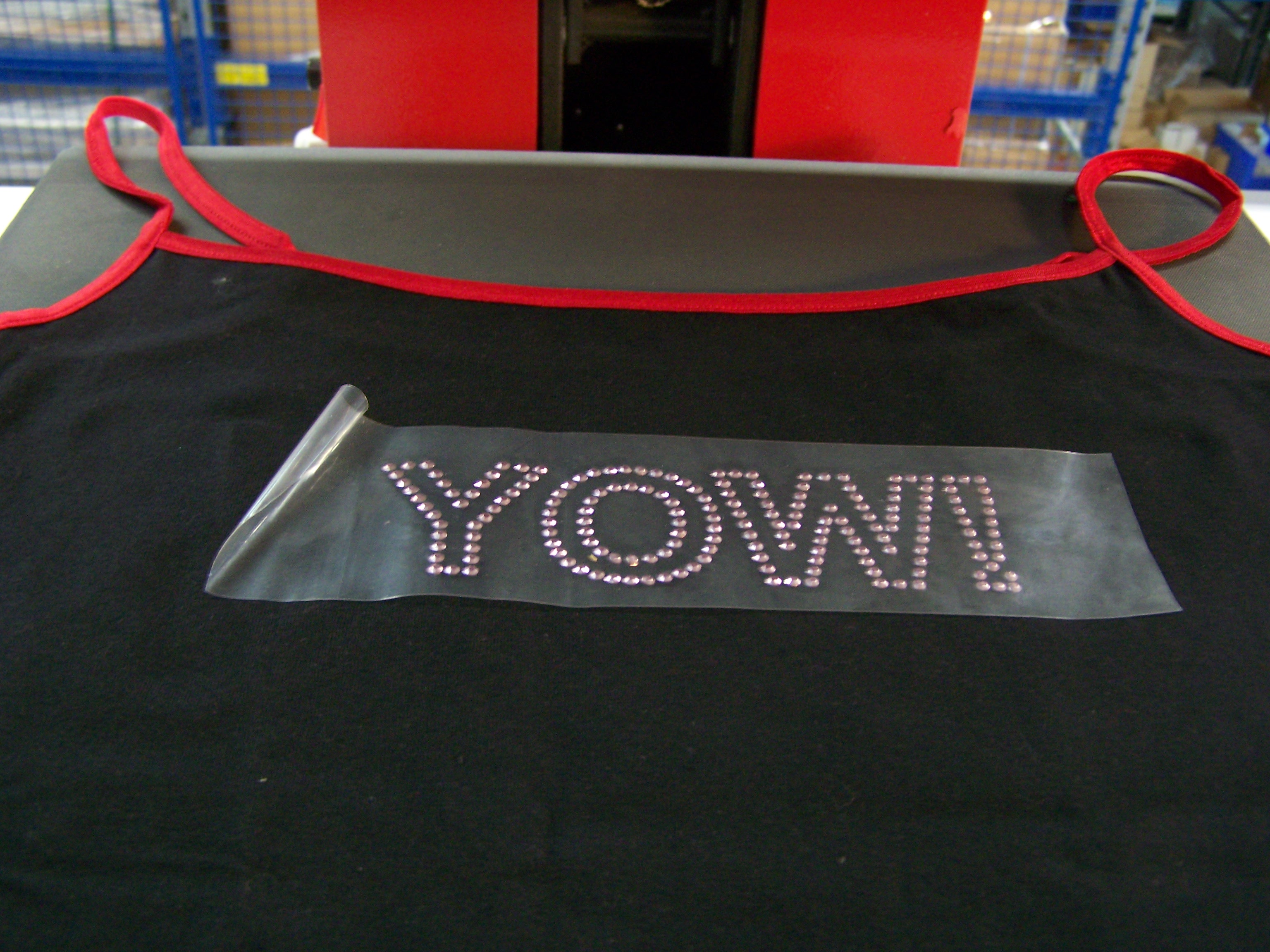
The stones are then pressed using a transfer press at medium pressure and 155°C for 20 seconds. Once cooled, peel off the transfer film – and you’re done.
Which fabrics are rhinestones suitable for?
Textile embellishment with rhinestones is suitable for all types of textiles made from cotton or blended fabrics. Jeans, T-shirts, caps, bags, dresses and even table textiles such as cloth napkins are suitable for this. The rhinestones applied to the textiles in this way are long-lasting and washable at up to 40 °C; washing inside out is recommended.