Introduction to cutting plotters
Cutting plotters are a key component of many applications in advertising and creative technologies. We therefore aim to describe in detail how cutting plotters work and their technical specifications here:
What is a cutting plotter?
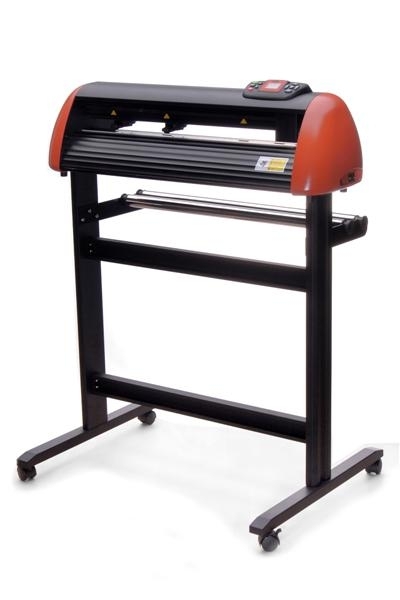
Cutting plotters are computer-controlled devices which, much like a printer, cut out shapes such as text, ellipses or rectangles from (self-)adhesive materials.
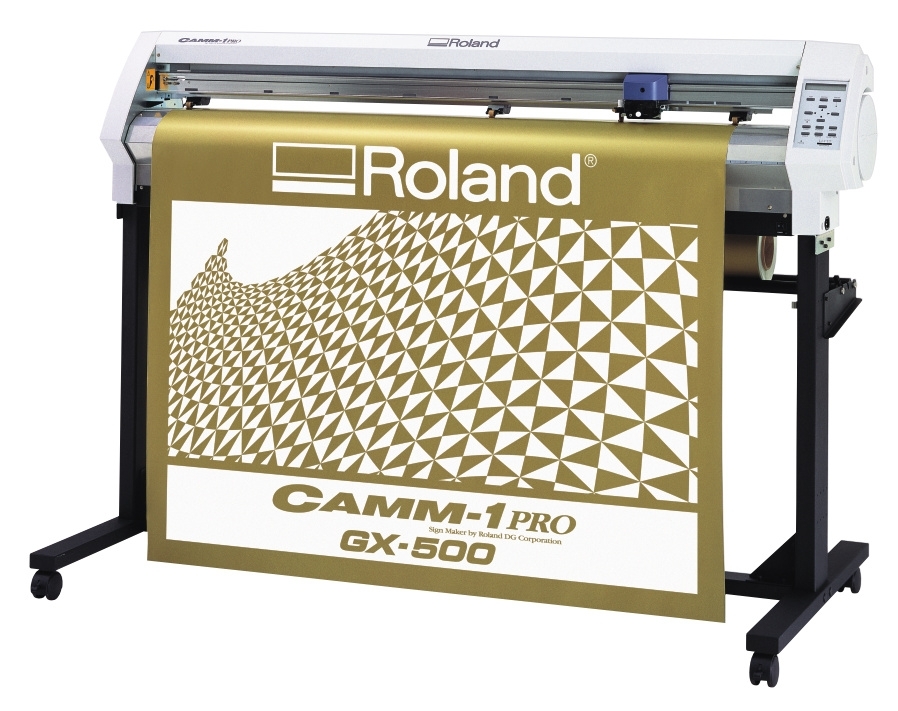
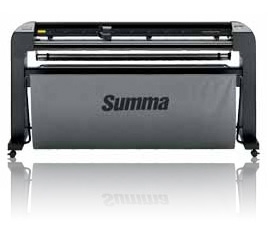
What does a cutting plotter do?
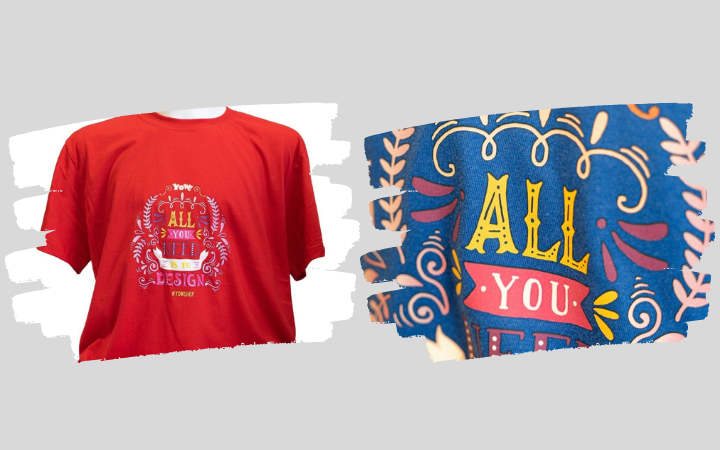
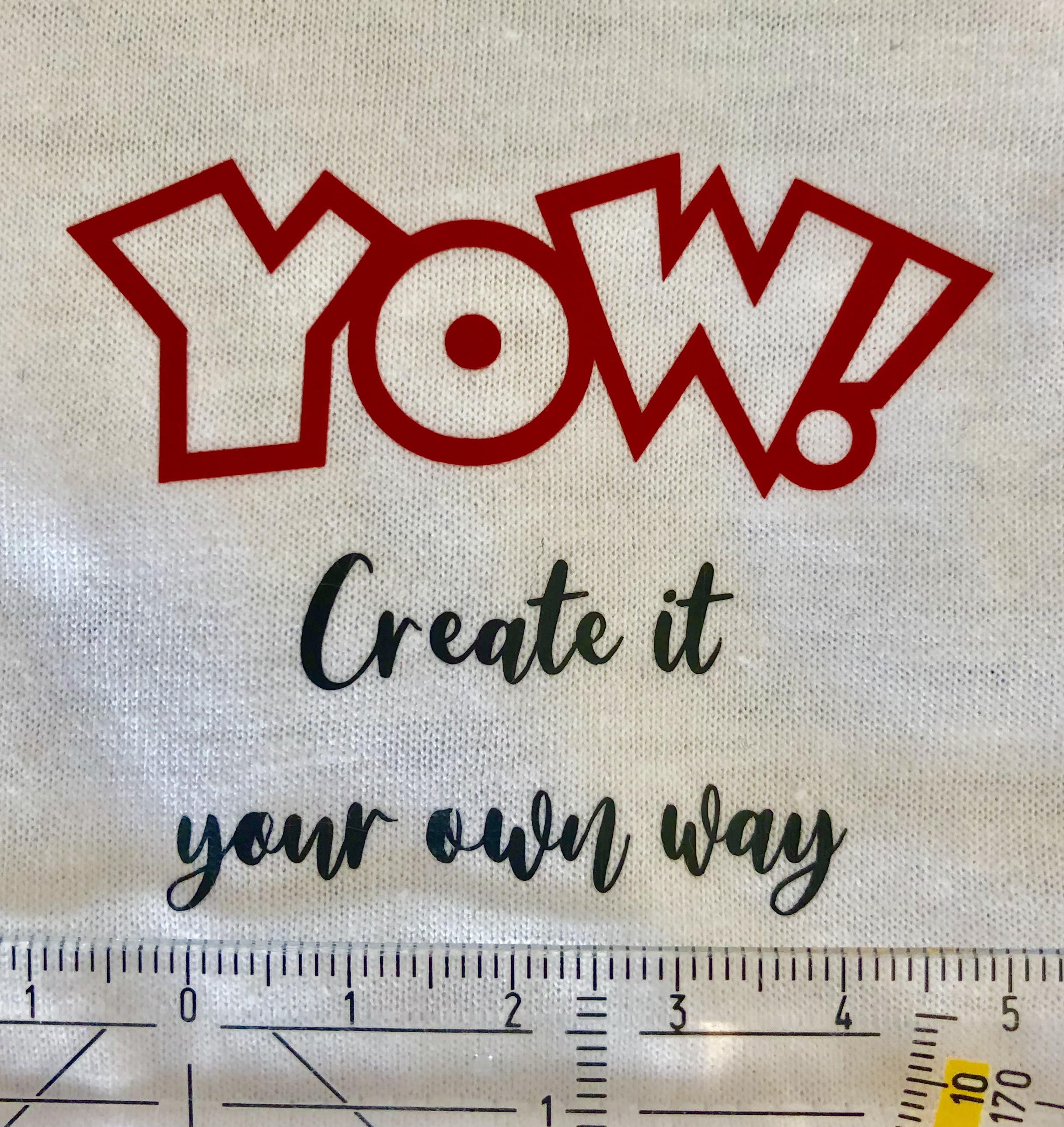
For the most part, a cutting plotter is used to cut single-colour self-adhesive films; these are therefore also known as cutting films. Only materials that have a backing can be processed. In the case of adhesive films, this is usually silicone paper. As well as self-adhesive films, a plotter can, of course, also cut flock and flex films – which, after cutting, are applied to textiles (in most cases) using a heat transfer press – as well as all types of paper.
How does it work?
When plotting, the cutting plotter’s blade cuts only the film itself; the backing remains intact and holds the entire plot or sticker together until it is transferred to a suitable surface.
There are two different types of cutting plotters available on the market, which differ not in their function but in their handling and price. A distinction is made between cutting plotters with a drag-knife mechanism and those with a tangential-knife mechanism.
How a cutting plotter with drag knife technology works
Cutting plotters using a trailing blade mechanism are the most widely used. They account for over 95 per cent of the market.
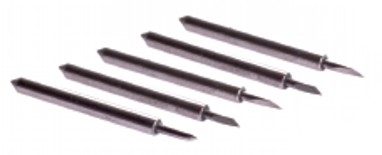
With this technology, a needle-like blade – which is slightly offset from the centre due to what is known as the ‘offset’ – is dragged along behind the movement of the blade head – hence the name. The process is robust and simple, resulting in low costs and high reliability.
As a rule, plotter manufacturers and independent suppliers offer several blades per machine.
The specified cutting angle is crucial here: a cutting angle of 30°, for example, indicates a relatively blunt but robust blade that delivers good results with a long service life when cutting thin materials for large objects. Blades with a cutting angle of 60°, on the other hand, are very sharp and delicate, and are therefore suitable for thick materials or very small objects.
Cutting plotters using tangential blade technology are less common
Tangential-blade plotters are considerably less common than drag-blade plotters. This is primarily because this technology, which also uses a needle-like blade but which is constantly adjusted to the correct tangential alignment by an electric motor, is significantly more expensive than conventional cutting plotters with drag knives.
Furthermore, plotters with tangential blades operate more slowly, as aligning the blade takes a certain amount of time.
What are the benefits of Schneideplot creative technology?
Advantages
- Affordable entry point available
- versatile technology
- easy to learn
Disadvantages
- A PC is required for control
A cutting plotter in action
What devices are available on the market?
The available appliances are divided into various categories, ranging from hobby appliances to professional machines:
- Hobby machines such as the Secabo mini or Graphtec CraftRobo
- semi-professional machines such as the Secabo CIII series
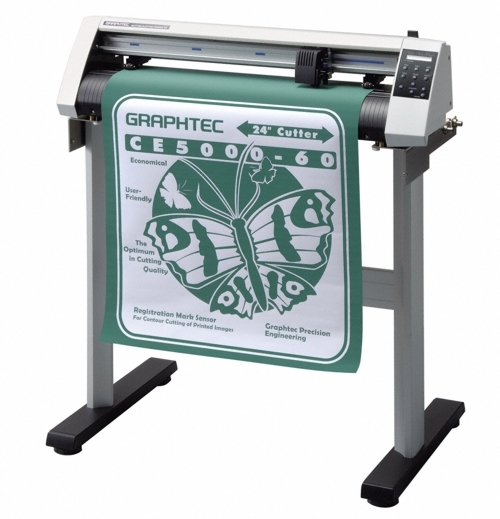
- professional cutting plotters such as the Graphtec CE5000 series, Roland GX-24, GX-300 to -500
- high-end cutting plotters such as the Summa S-Class, some of which feature tangential blade technology
Printing and cutting?
Recently, more and more manufacturers have been incorporating registration mark recognition functions into their cutting plotters (Secabo – LAPOS, Summa – OPOS). This enables the user to cut printed objects with precise contours.
For example, the user first prints product labels – including the corresponding positioning marks – onto a specific adhesive film using a laser printer. Once the cutting plotter has read these marks, it can cut any desired outline around the printed objects. This produces professional labels, tags, type plates or even car stickers. Such functions are available in cutting plotters from manufacturers such as Secabo, Roland, Graphtec, Summa and many others.