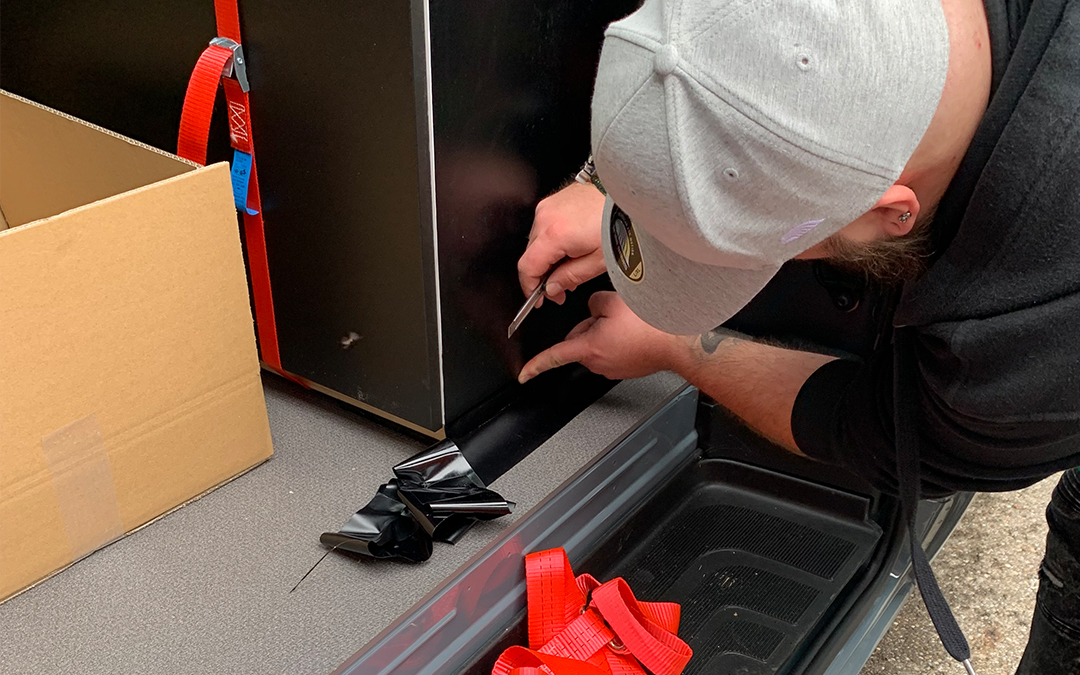
We’re getting a new kitchen today.
We’ve been doing a bit of Googling recently to see what others are getting up to in the field of creative technologies. One thing that stands out is that ‘decorating the kitchen’ remains a perennial favourite. This practically invites us to answer the most frequently asked questions on the subject:
1. Yes, it really does work,
2. no, it’s not difficult,
3. yes, the water used in wet application dries out again, and
4. of course, we also stock the right films in lots of different colours!
But first things first:
When applying film to a surface, it is very important that the surface to be covered is thoroughly cleaned and degreased so that the film adheres completely and without any debris. It’s a good idea to test the material on an inconspicuous area before proceeding. As a rule, however, the film adheres to all surfaces without any problems and can be removed at any time without leaving any residue. Any adhesive residue could also be tackled with a special adhesive remover, but if you’re applying film to a kitchen, it’s usually for a good reason.
Useful tools include a spray bottle containing a mild washing-up liquid solution for wet application (simply add 1 drop of washing-up liquid to 1 litre of water, e.g. in a spray bottle), a squeegee (or, if necessary, a credit card or a shower screen squeegee) for smoothing and spreading the film, and a small needle for pricking any bubbles.
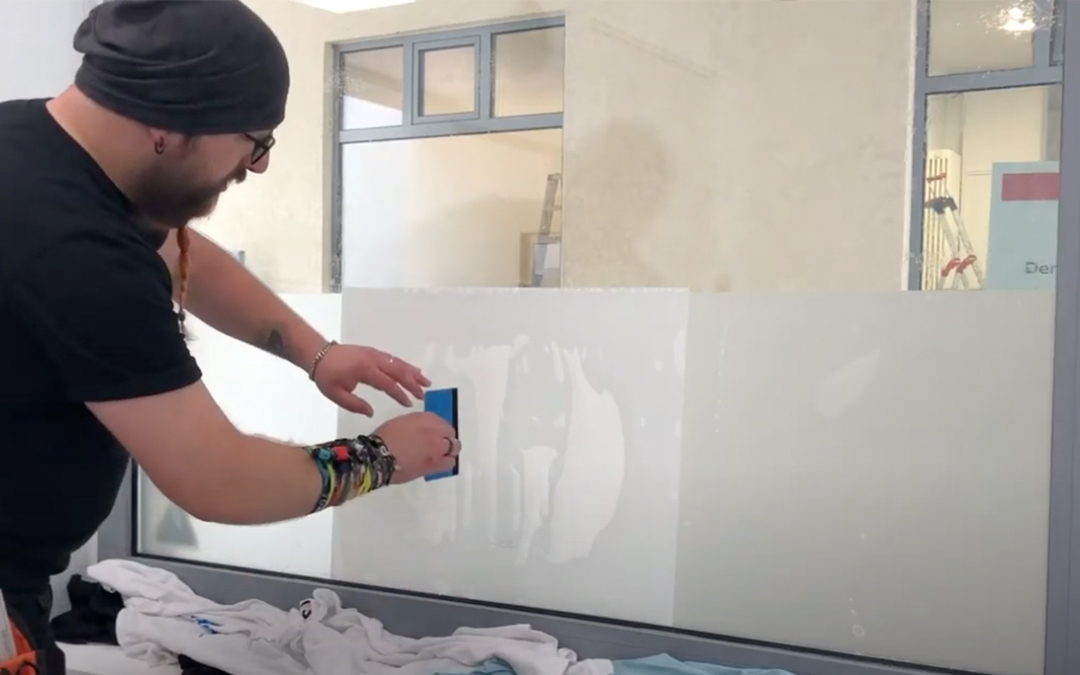
When applying the film, it is advisable to remove the fronts as far as possible, though applying the film to a fitted kitchen is also no problem. Handles and knobs should be removed. Moisten the cleaned and degreased surface evenly with the washing-up liquid solution, then place the appropriate film on top without stretching it and align it. The great advantage of wet application is that the film can be easily moved into the correct position. Once this has been achieved, simply press the film down from the centre outwards towards the sides and smooth out the water with a plastic squeegee. Use the needle to prick any bubbles that may have formed. The surface should be used with care until the water has completely evaporated, to prevent the film from accidentally peeling off, particularly at the edges.
Once the film has dried, the kitchen is ready for immediate use; the surfaces covered with film are just as robust and suitable for everyday use as before. And, of course, they can be cleaned too…
Recommended films for kitchen or furniture wrapping include Ritrama Standard Gloss (33 colours, various dimensions, e.g. 10m x 21cm from 13.05 EUR), Ritrama Standard Matt ( 33 colours, various dimensions, e.g. 10m x 21cm from 13.05 EUR) or Ritrama Pro Gloss ( 51 colours, various sizes, e.g. 10m x 21cm from 19.39 EUR).
For giving glass surfaces a fresh look, frosted glass films in various designs are naturally ideal; they are handled and applied in the same way as described above, and the effect is often surprising!