What is DTF?
DTF transfer: The revolution in textile finishing.
What is DTF, how does it work and which solution is right for you? Find out everything about direct-to-film printing - from the starter kit to industrial production.
In 5 steps to the finished textile: The DTF workflow


Revolutionarily simple - the direct-to-film process
Direct-to-Film, or DTF for short, has taken textile finishing by storm. In contrast to conventional processes, the motif is not printed directly onto the textile, but first printed in reverse onto a special transfer film. The process is as efficient as it is ingenious:
Dein Motiv wird spiegelverkehrt mit speziellen DTF-Tinten auf eine beschichtete PET-Folie gedruckt. Die weiße Tinte bildet dabei die abschließende Deckschicht und sorgt für brillante Farben auf jedem Untergrund.
Auf die noch nasse Tinte wird ein spezielles Schmelzkleber-Granulat aufgetragen. Der Kleber haftet präzise nur an den bedruckten Stellen und garantiert später die extrem hohe Waschbeständigkeit.
Im Trockenofen oder Shaker wird der Kleber bei konstanter Hitze geschmolzen (geliert). Dadurch verbindet er sich fest mit der Farbe zu einer belastbaren und dehnungsfähigen Transferschicht.
Das fertige Motiv wird mit einer Transferpresse unter Hitze und Druck auf das Textil übertragen. Der geschmolzene Kleber verankert sich dabei tief in den Fasern deines Stoffes.
Nach dem Abkühlen (oder direkt bei Hot Peel) wird die Trägerfolie abgezogen. Ein kurzes Nachpressen fixiert das Motiv endgültig, sorgt für einen weichen Griff und maximale Haltbarkeit.
Maximum freedom without weeding!
The advantages of direct-to-film over flex film or screen printing are immense, especially when it comes to speed and detail:
No more weeding: as the adhesive only adheres to the ink, there is no need for tedious manual removal of residual film - even for the finest lines and lettering.
Outstanding stretchability: DTF transfers are extremely elastic and follow every movement of the fabric without tearing or peeling.
Photorealistic results: Brilliant colours, smooth gradients and high-resolution details are standard in the DTF process.
Universally applicable: Whether cotton, polyester, blended fabric, nylon or softshell - DTF adheres to almost all textiles, whether light or dark in colour.

Many people are surprised when the transfer doesn't hold perfectly after washing - this is often due to residual moisture in the fabric. My tip: Pre-press each item of clothing for approx. 3 to 5 seconds before applying the DTF transfer. This removes the moisture from the fabric and smoothes the fibres. This allows the hot melt adhesive to optimally penetrate the fabric and form an unbeatable bond.
Ääd
DTF Experte bei YOW!
Clubs & Teams
Robust durability and quick personalisation - ideal for jersey numbers, club crests and fan shirts. Withstands every duel and countless washes.

Advertising technicians & copy shops
Portfolio expansion without investment hurdles - offer high-quality textile finishing without needing space for screen printing carousels or drying channels.

Fashion brands & streetwear
High-end look and fine details - photorealistic prints and filigree gradients on dark hoodies or caps without perceptible foil edges.

Event & merchandising agencies
On-demand production and speed - produce merch exactly when it's needed. Thanks to Secabo MultiTrim Pro, you can cut hundreds of transfers in minutes for immediate use.

Workwear & workwear
Industrial resistance on difficult fabrics - DTF adheres perfectly to coarse canvas, softshell or nylon. The high opacity of white ensures brilliant logos on every work jacket. But beware, textiles printed with DTF should be washed at a maximum of 60 °C!

Creator & Etsy shop owners
Maximum margin for small print runs - Whether personalised gifts or your own artwork: With the YOW! Transfer service, you can start without your own machine or scale up with Secabo hardware as your business grows.

Want to get started in the DTF world? These products will help you!
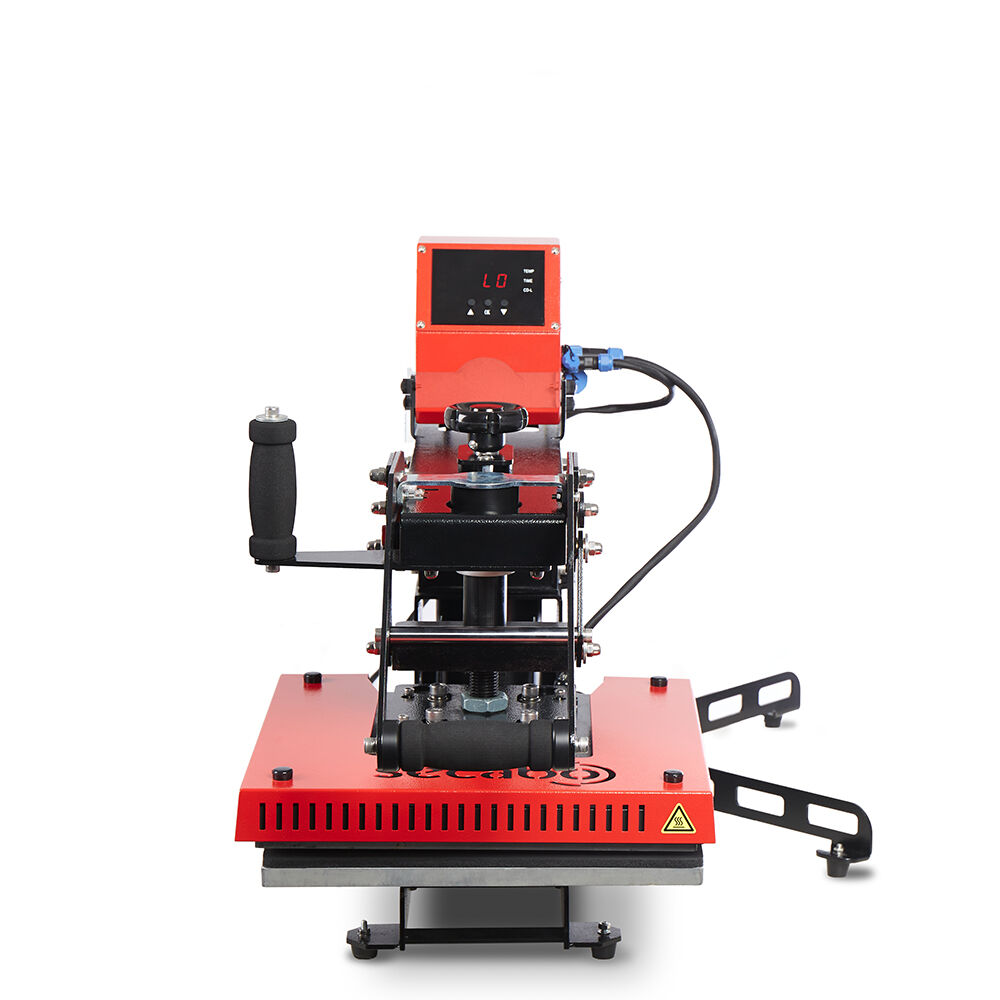
Best performance and high comfort with the Secabo LITE seriesThe Secabo TS5 LITE represents an innovative development in the field of swing-away Heat Presses, specially designed for modern textile finishing and transfer printing businesses. With this model, Secabo offers a cost-effective yet powerful alternative to the existing SMART line, ideal for start-ups and smaller businesses that want to invest in quality without compromising.The LITE Heat Presses offer everything that makes textile transfers with Secabo so convenient. All professional applications of common heat transfer processes such as flock foils, flex foils, sublimation, DTF transfers etc. are of course possible. The Secabo TS5 LITE can be optionally equipped with interchangeable plates in various formats - including a membrane base plate, a quick-change system and a slide extension for use as a double plate press.Intelligent display functions: With the digital controller for temperature and time, the desired settings can be made quickly and easily.State-of-the-art press design: The TS5 LITE impresses with its intelligent design and high-quality materials. The modular design makes it quick and easy to adapt to different requirements.A basic product with great upgrade options: The TS5 LITE can be optionally equipped with interchangeable plates, a membrane base plate, a quick-change system and a slide extension to function as a double plate press or be optimised for specific applications.The Secabo TS5 LITE Heat Press offers everything you need for efficient and high-quality textile transfers, allowing you to realise your creative visions with precision and convenience.Heat Press opens automatically after the time has elapsedDigital controller for temperature and timeTemperature and time can be set on the controller using arrow keysModular design, components can be easily exchangedEasily adjustable contact pressureHigh-quality heating plate with additional protective plateSuitable for all common transfer processesCan be retrofitted with accessories such as exchangeable plates, slide extension or membrane heating plate for even greater productivity.
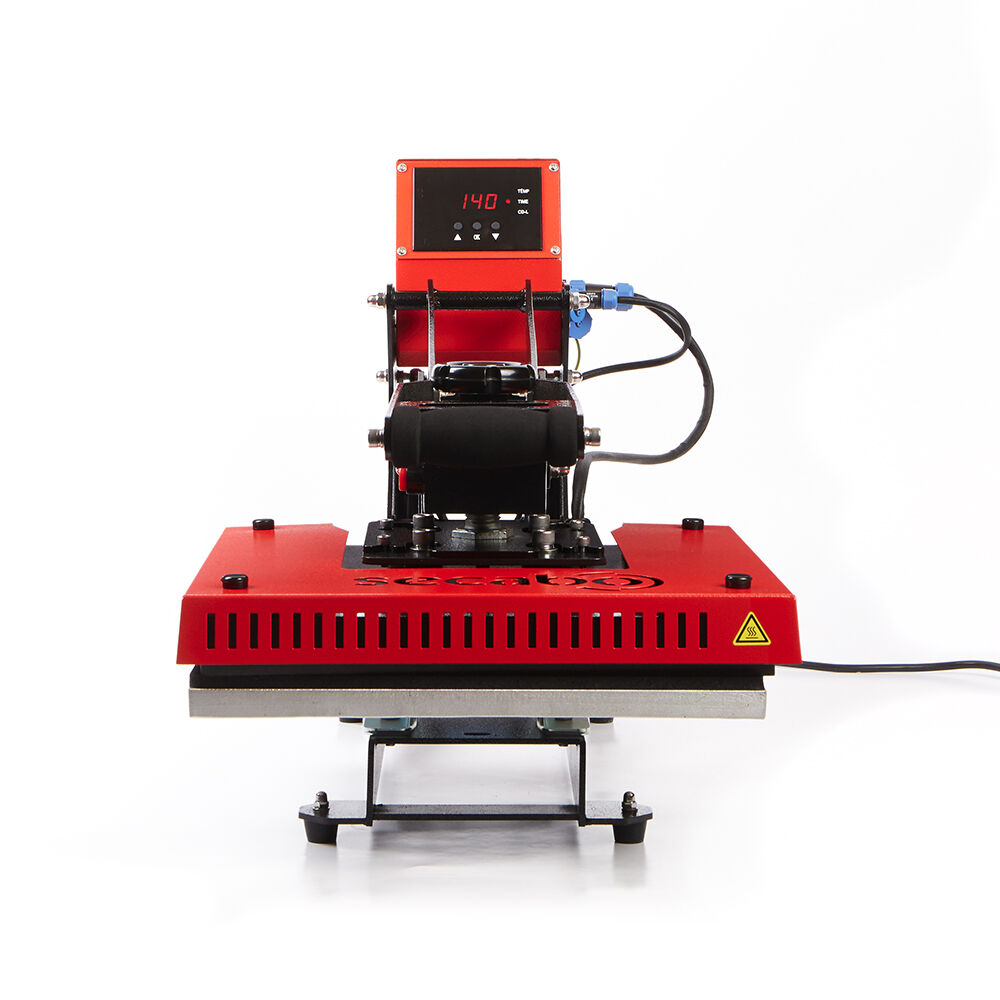
Top performance and high convenience with the Secabo LITE series - With this new development of the successful Secabo TC5 toggle press, Secabo is launching a lucrative modular system on the market that opens up a wide range of new possibilities for users. Added flexibility thanks to easily interchangeable components - in short, a basic product with great upgrade options. The new LITE models therefore have the advantage of being able to retrofit individual base plates or heating platens at low cost and easily replace components as required. The TC5 LITE Heat Press from Secabo is a modular, automatically opening toggle press. The user does not have to wait next to the press during transfers, but can carry out other activities. Once the set time has elapsed, the press opens automatically and announces this three seconds in advance with an acoustic signal. The pressing process can be interrupted at any time at the touch of a button - for example to pre-press textiles. The temperature and pressing time are conveniently preselected using a digital controller. The contact pressure is set using a large handwheel on the top of the heating plate. The TC5 LITE Heat Press, with a working surface of 38cm x 38cm, has an additional cover plate on the heating plate to protect the user from burns. The design of the TC5 LITE is fully modular; the control unit, heating plate, base plate and base frame can be removed and replaced in a few simple steps. This also allows the use of other heating plates, for example. The LITE Heat Presses offer everything that makes textile transfers with Secabo so convenient. All professional applications of common heat transfer processes such as flock foils, flex foils, sublimation, inkjet flex, etc. are of course possible. The Secabo TC5 LITE can be optionally equipped with interchangeable plates in various formats - including a membrane base plate, a quick-change system and a slide extension for use as a double plate press. You also have the option of upgrading the TC5 LITE to our Secabo TC-SMART series.

Create an unlimited number of designs on a 1 running metre (560 x 1000 mm) sheet. Our DTF transfer printing offers you numerous advantages:No set-up costs: start directly without additional set-up costs.Colours without surcharge: Take advantage of our offer without colour surcharges.No colour restrictions: Experience the freedom of high-resolution digital printing in CMYK+white.Flexible design: Place your motifs, logos or designs anywhere on the sheet.Mixed sheets possible: Combine different designs on one sheet and still benefit from graduated prices.Note: For very intricate fonts (hairlines), the white underfill may reach its limits and the granules may not adhere. We recommend a font thickness of at least 2 mm.Benefit from the flexibility and quality of our DTF transfer printing and design your textiles according to your wishes.

Advantages of the Secabo MultiTrim Pro at a glanceIntelligent film tracking for precise cutting over long websBlades are adjusted at the start - the process then runs stably and reliablyIdeal for DTF standard transfers and mug wrapper productionFaster than a DTF cutter with consistent formatsCost-efficient alternative for entry-level professional processingCompatible with marking systems such as Fotoba or SagaTypical areas of applicationSeries cutting of DTF transfersProduction of mug wrappers for sublimation mugsTrimming of roll goods in the field of advertising technology and textile finishingSupplement or alternative to fully-fledged cutters for standard applications